
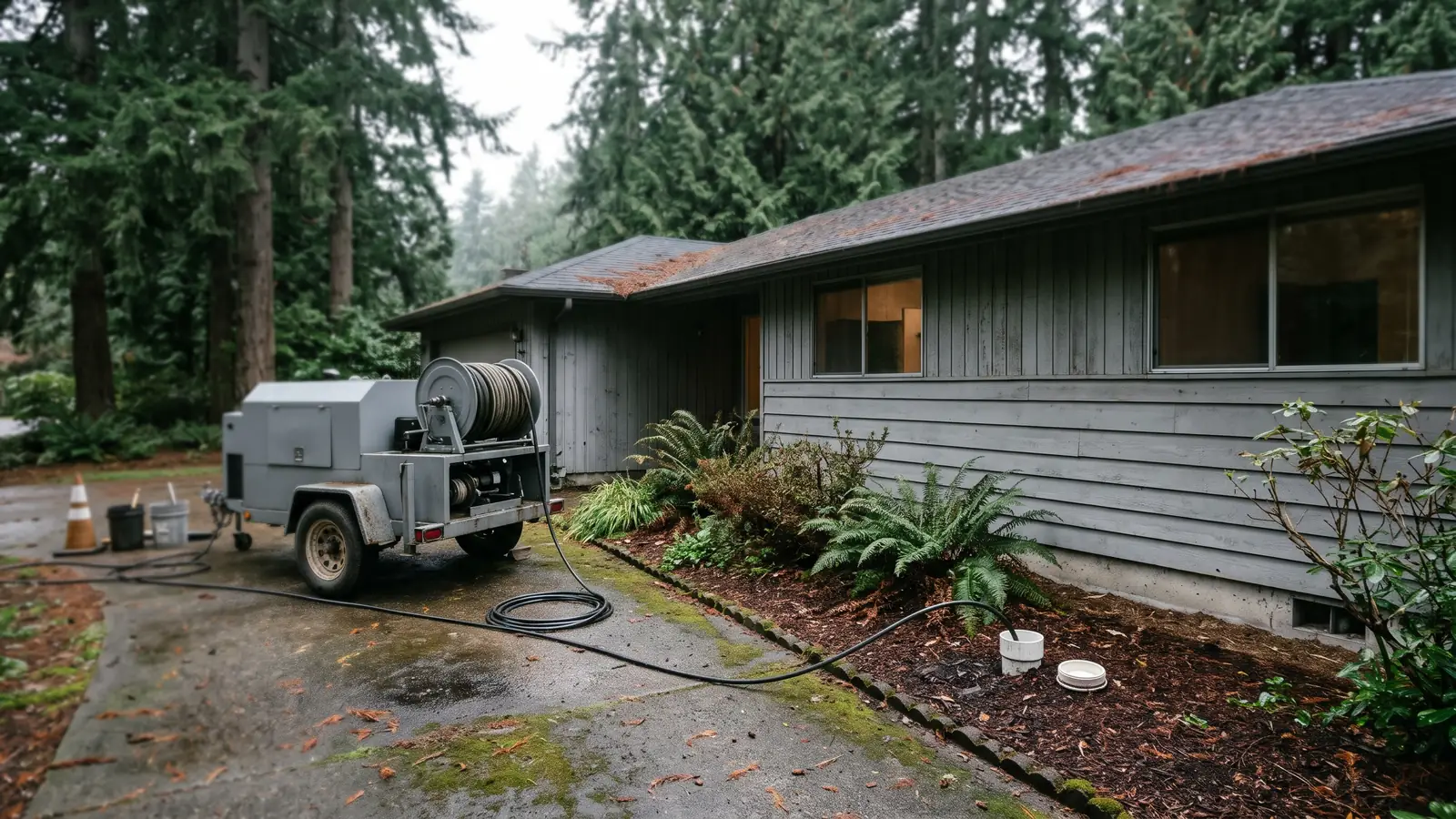
When a Scope Fits a Kent Home Sale
King County's advice to anyone buying a house is to always get a side sewer inspection. Who orders it, and when, depends on which side of the sale you're on.
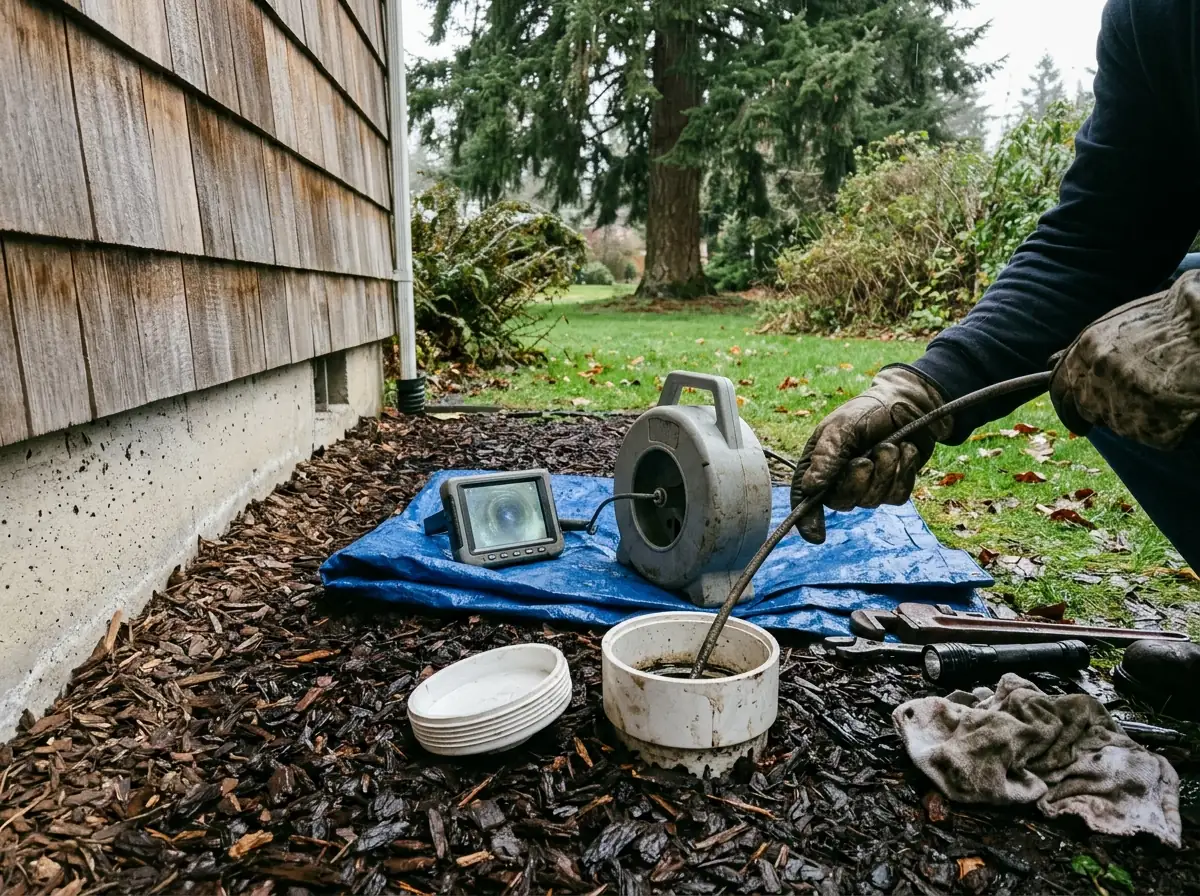
Buyer's Scope in the Inspection Window
A buyer's scope belongs inside the inspection period your purchase agreement sets, while findings can still shape the deal. HomeGuide notes that a standard home inspection, which it prices at $300 to $500, usually doesn't include the sewer, and not every inspector offers a scope as an add-on. A plumber can run it separately. From closing day the side sewer is yours, all the way to the city main (who owns which part).
Scoping Before You List
Washington's seller disclosure form asks whether the house is connected to the sewer main and whether every fixture, laundry drain included, is connected to the sewer or septic system. The same form tells buyers they can hire their own experts, plumbers among them. A seller who scopes first gets the answer and the footage before the buyer's camera does, and has time to get repair bids instead of negotiating against a surprise.
Reading the Report: Bellies, Offsets, Roots and Orangeburg
Ask for the video along with the written notes; HomeGuide says plumbers may hand over a copy. The terms that matter most:
- Belly: a low spot where the pipe has sagged and debris collects.
- Offset: two pipe sections that no longer line up, usually from settling.
- Roots: common in older clay and cast iron, much less so in PVC.
- Orangeburg or clay: older materials that call for care with jetting pressure (pipe materials and jetting).
If a heavy clog stopped the camera, the report covers only the pipe up to that point. Clear the line and film it again before you rely on it. Breaks, collapses and bad offsets are repair findings; sewer line repair covers the methods and the Kent permit.
Homes on Septic Need a Different Inspection
A house on septic has a separate legal step. King County requires the seller to have the system inspected by a licensed on-site system maintainer before title transfers, and the maintainer files the report with Public Health. A plumber's camera in the house-to-tank line can still help, but it doesn't replace that inspection. See septic line jetting for the certificates involved.
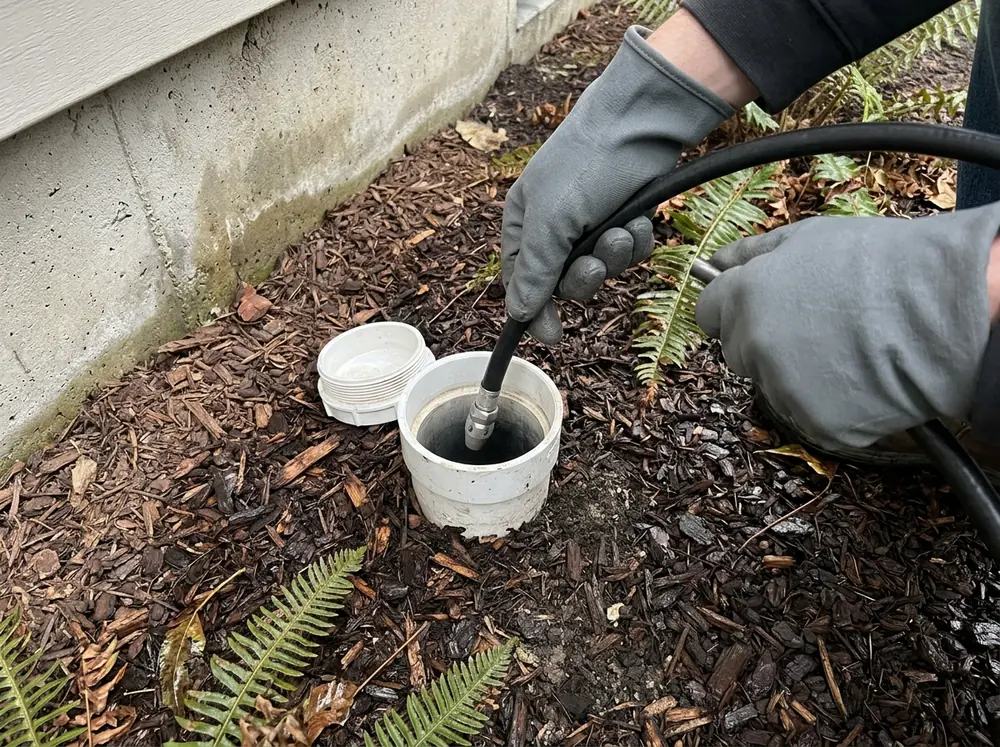
Why Kent homeowners and businesses call Kent Hydro Jetting
- The request is free, and you decide whether to book
- One licensed local plumber gets your request, not a call list
- Ask for a camera look before any pressure goes in
- Ask for the price in writing before the work starts
- You pay nothing for the referral
Kent's Housing Age and the Pipe Under It
King County says a side sewer is often as old as the house, and Kent's houses span decades. Census figures for 2024 count 49,952 housing units in the city:
Median year built
1987.Built before 1980
About 36%.Built before 1970
About 20%, the band where clay and Orangeburg lines turn up more often.Built before 2000
Roughly three in four, which puts most of the city past HomeGuide's 20-year mark.
The older bands carry wide margins of error, so read them as a rough picture of the city, not a forecast for one street. For a specific house, only the camera tells you what's in the ground. Clearing a clog the scope finds needs no Kent permit if the pipe is undamaged; repairing it does.