
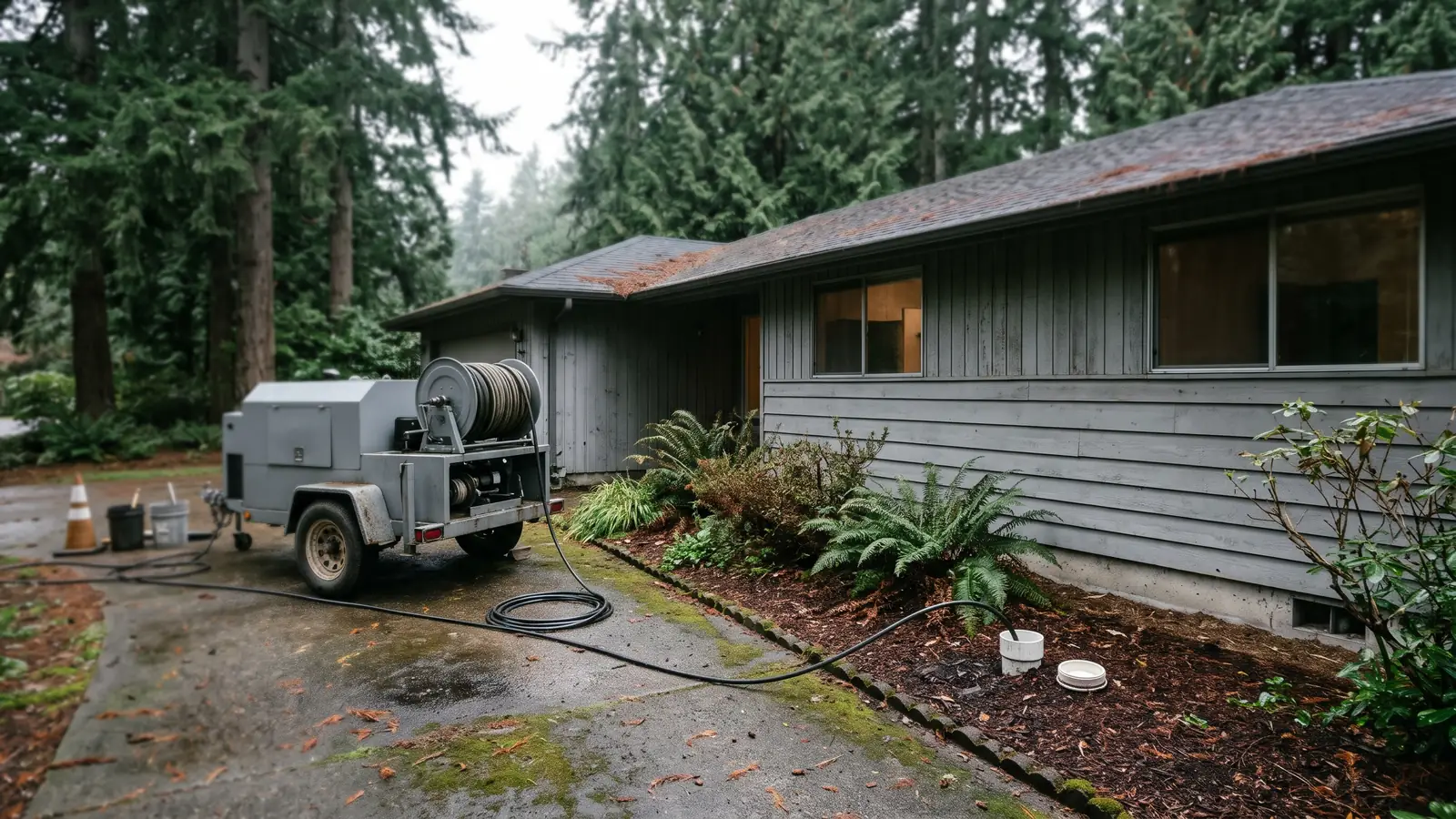
Commercial Lines by Building Type
A commercial main can be three times the width of a house sewer: HomeGuide's table gives 6 to 18-plus inches for commercial pipe against 2 to 6 for homes, with jetting pressure starting around 3,000 psi. Restaurant kitchens have their own Kent rule and page: grease trap and line cleaning. Multifamily buildings are covered under apartment and condo drain cleaning.
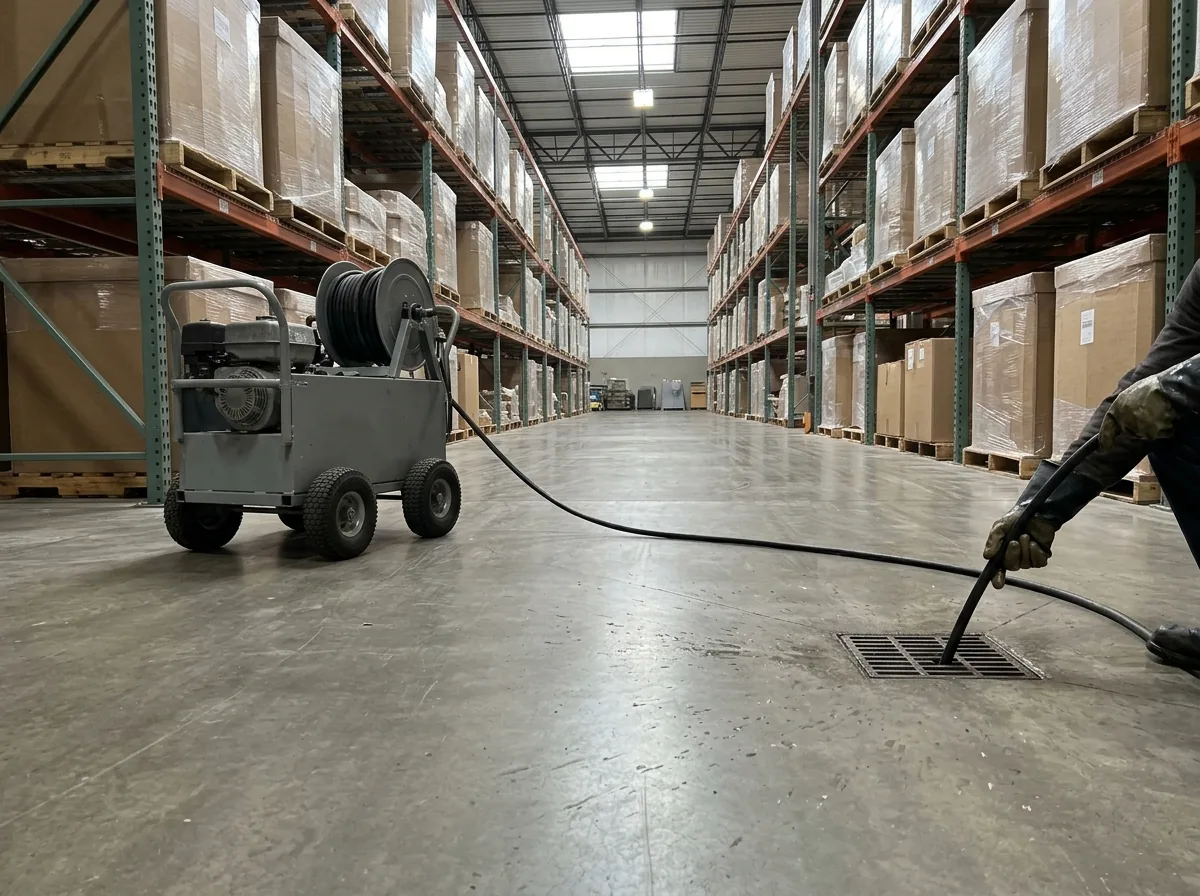
Warehouse and Industrial Floor Drains
Whatever goes down a warehouse floor drain has to meet Kent's sanitary sewer limits. The code bans sand, mud, metal, shavings, rags and plastic from the sewer, along with flammable liquids like fuel oil, waste hotter than 150 degrees Fahrenheit and waste outside a pH of 5.5 to 9.0. For lines this size, RIDGID sells its KJ-3100 for large commercial and industrial work:
- Pressure: 3,000 psi.
- Flow: 5.5 gallons a minute.
- Line size: 2 to 10 inches.
That machine tops out at 10-inch lines, and HomeGuide's commercial range runs past 18 inches, so ask what equipment the plumber plans to bring for the building main.
Office Restroom Lines
A clog in a restroom branch line can take several fixtures out of use at once. Inside a building this is plumbing work in Washington's legal sense, done by a certified plumber working for a licensed plumbing contractor (checking a plumber's license). A planned visit before opening hours costs less disruption than a backup during them, and night or weekend calls carry a higher rate (after-hours pricing).
Retail Plaza Shared Sewers
A plaza whose storefronts drain into one private pipe before the city main carries a shared risk. If the city orders work on that pipe, every connected building's owners, agents or occupants are jointly and severally liable for it, and the city may do the work itself when a notice goes unanswered (the notice rule). A camera run that marks where each tenant's line joins the shared pipe helps settle who caused a clog.
Service Contracts on a 3-12 Month Schedule
HomeGuide's interval for commercial lines is every 3 to 12 months, against 18 to 24 for a house. Bob Vila ties commercial prices to pipe size and length, so a contract quote should list each line by diameter and footage, not just a visit count. Things to get in writing:
- the lines covered and the interval for each;
- a camera run before and after, with a copy of the footage;
- the per-visit price and what an extra call-out costs.
Why Kent homeowners and businesses call Kent Hydro Jetting
- The request is free, and you decide whether to book
- One licensed local plumber gets your request, not a call list
- Ask for a camera look before any pressure goes in
- Ask for the price in writing before the work starts
- You pay nothing for the referral
Kent Rules That Reach Commercial Drains
The side sewer is the owner's
Kent's code puts maintenance and clearing of the whole side sewer on the property owner, out to the public main (details).Rainwater stays out of the sewer
A dock trench or roof drain tied into the building sewer breaks Kent's ban on storm, ground and roof water in the sanitary system (the rule). Parking lot basins and storm lines are on the catch basin page.No enzymes or bio-additives
Kent bans emulsifiers, enzymes and bio-additives from the sanitary sewer, so a drain "maintenance" product isn't a substitute for cleaning.Clearing needs no permit; repair does
See sewer line repair.