
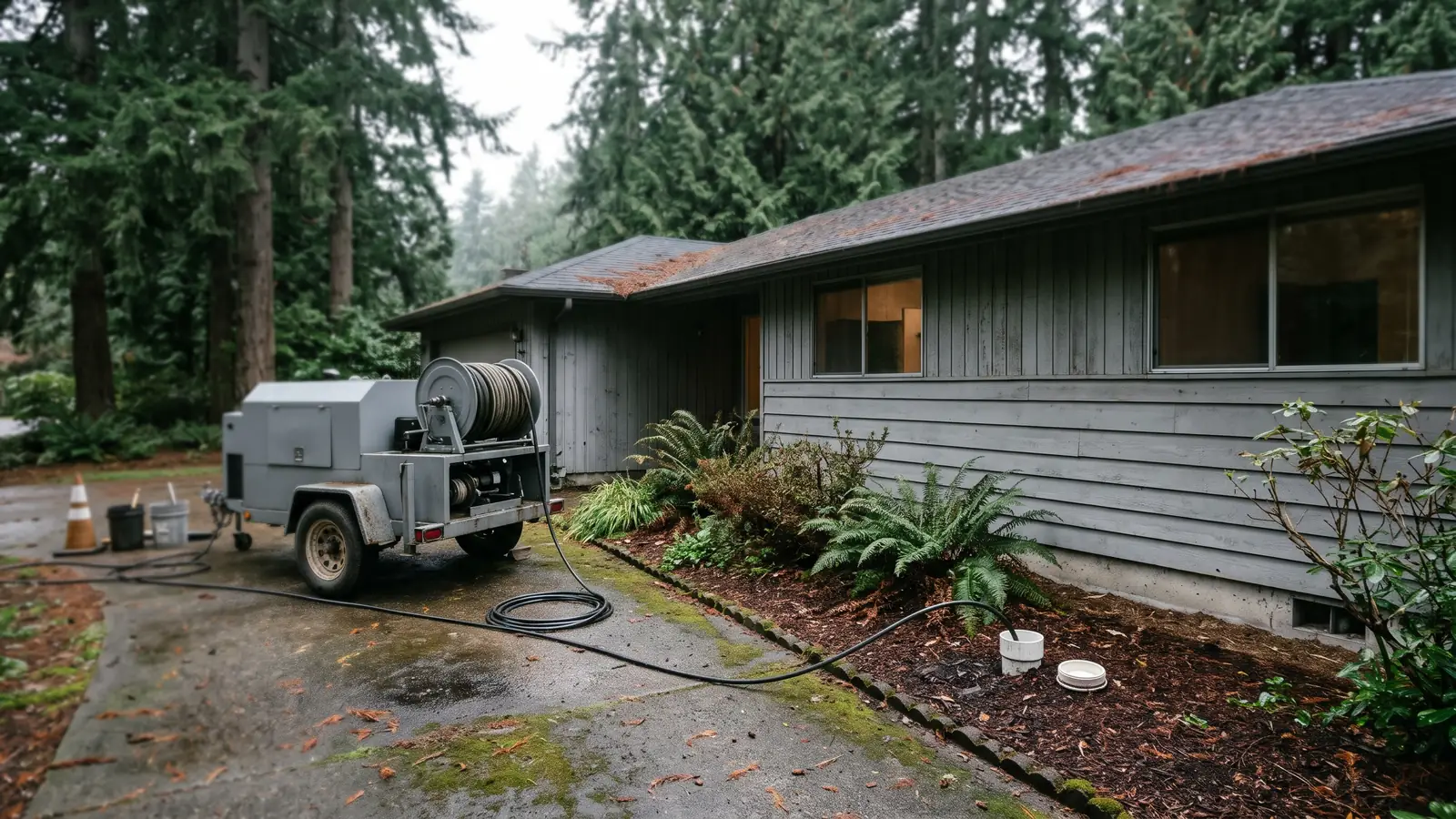
Sewer Line Cleaning Jobs on a Kent Side Sewer
Kent's code splits the house sewer in two. The building sewer runs from the outside wall of the house; the side sewer is the gravity pipe that carries it on to the public main. A cleaning job can involve any stretch of that path.
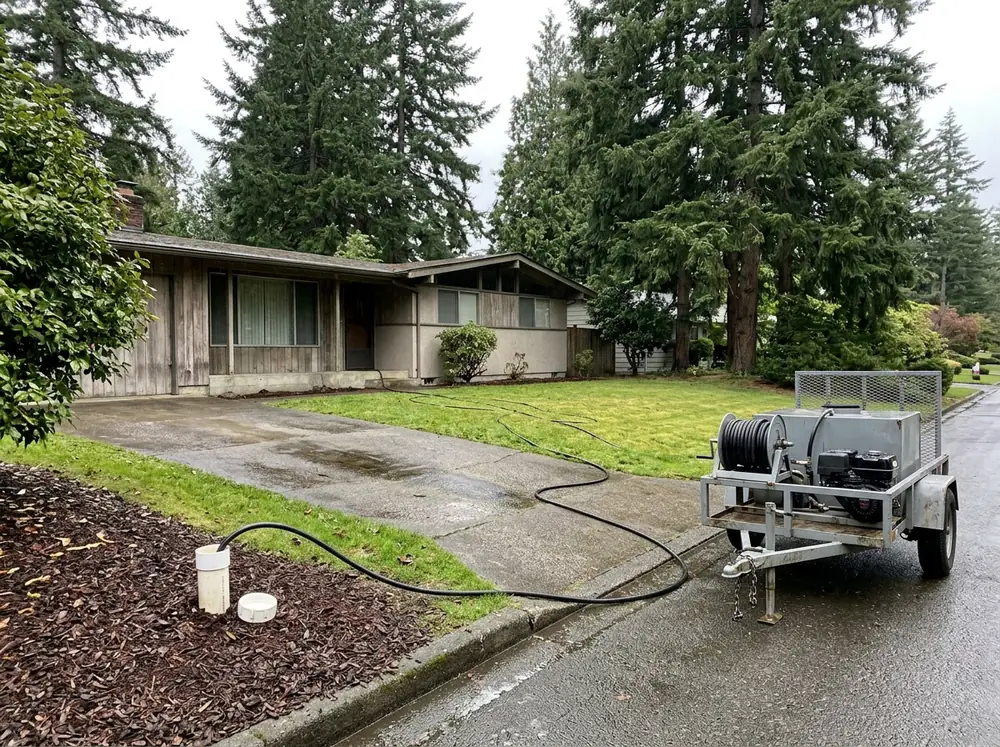
Side Sewer Jetting from Cleanout to Street Tee
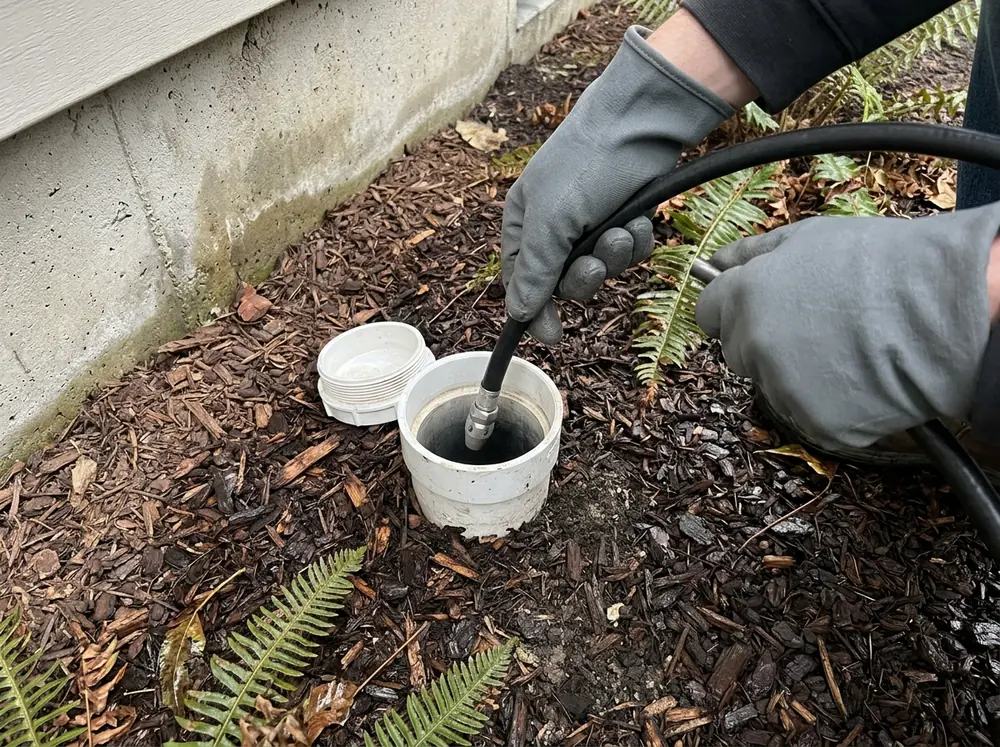
The hose goes in at the outdoor cleanout and is fed downstream toward the tee where the side sewer meets the public line. Kent defines the side stub as the piece from the public main to your property line; who pays for it is covered below. King County's side sewer page lists clay, brick, concrete, iron and plastic as the materials you may find, and says the pipe is often the same age as the house, so the material sets the pressure. HomeGuide puts most house lines at 50 to 150 feet, and more bends and connections mean more time.
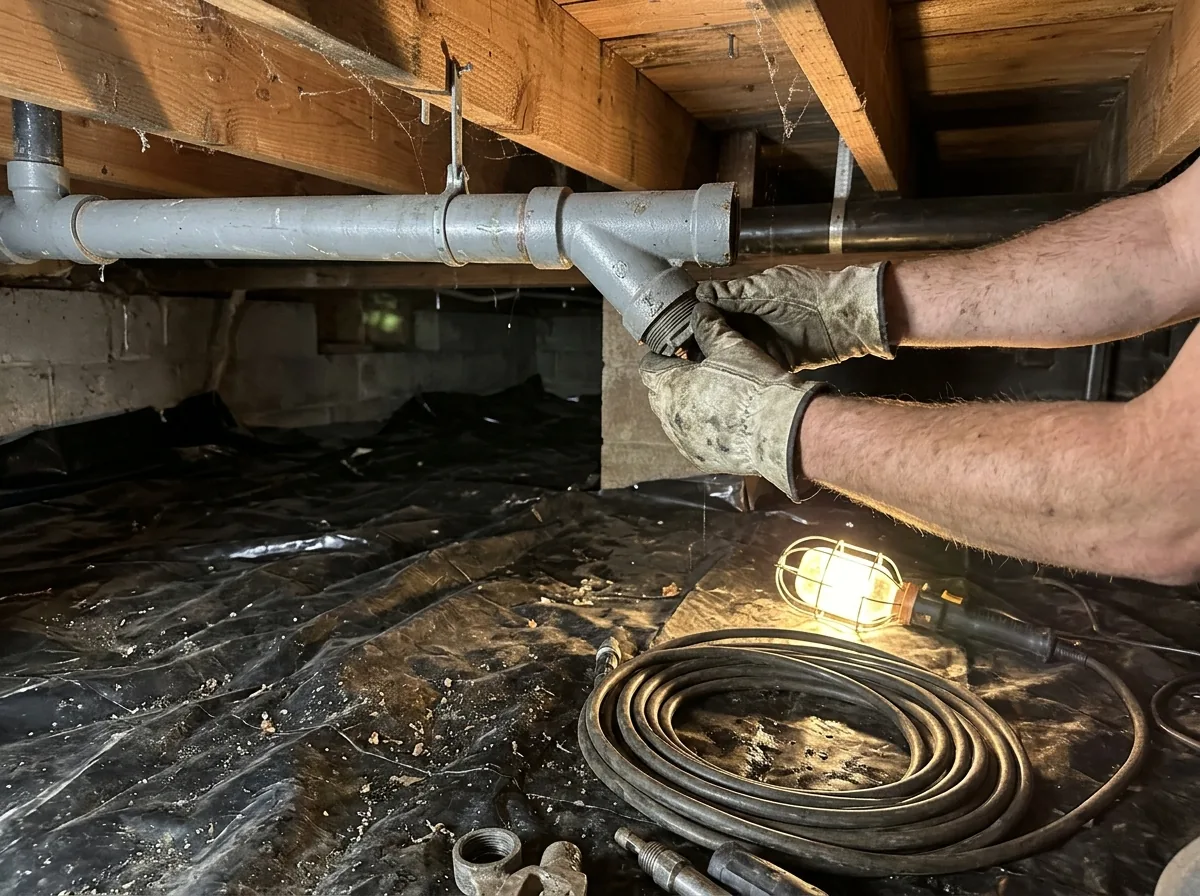
Building Drain Under the Crawlspace or Slab
Inside the house, the drains join one low horizontal pipe before it leaves through the foundation. Angi's Seattle guide says sewer lines are typically located in the crawl space, basement or garage. Washington's plumbing law covers work within a building, so this stretch is plumber's territory. With no cleanout, HomeGuide says plumbers reach the line through a toilet, a sink drain or a roof vent, which adds labor. The toilet clog page covers what pulling a toilet involves.
Main Lines That Clog Again After Snaking
A cable is the cheap first try, but HomeGuide's sewer cleaning guide says snaking only makes a hole through the blockage and leaves debris on the pipe walls, and HomeGuide's jetting guide adds that this leads to faster re-clogging. Jetting scours the wall instead, and HomeGuide says the result usually holds for 2 to 3 years. If the main has needed the cable twice in a year, ask for the camera first and a jetting quote second. Drain cleaning compares the two methods for smaller lines, and sewer camera inspection covers what the footage should show.
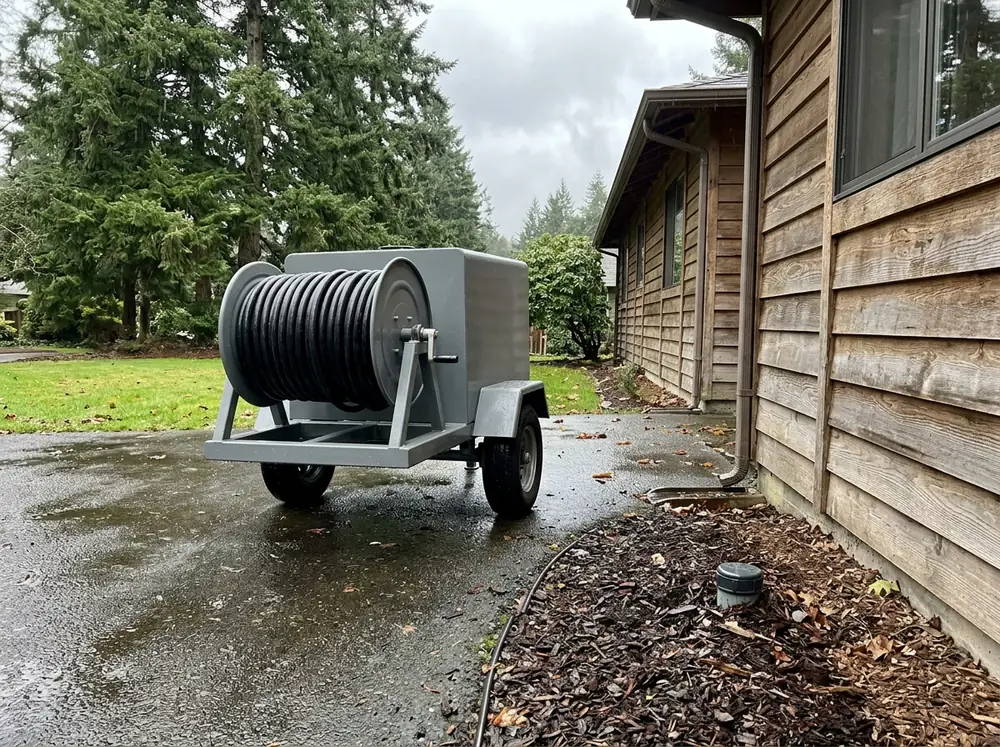
Scheduled Maintenance Jetting
A line cleaned on a schedule gets done on a weekday, not during a backup. The figures the guides give for homes:
- An 18- to 24-month jetting cycle, shortened where trees crowd the line or it has blocked before (HomeAdvisor, HomeGuide)
- A camera look at the line every year or two (Angi)
- 2 to 3 years of clear running after a professional jetting, for most homes (HomeGuide)
Trees near the run are the usual reason to shorten the gap. Sewer root removal covers re-cut timing.
Why Kent homeowners and businesses call Kent Hydro Jetting
- The request is free, and you decide whether to book
- One licensed local plumber gets your request, not a call list
- Ask for a camera look before any pressure goes in
- Ask for the price in writing before the work starts
- You pay nothing for the referral
Who Owns the Side Sewer in Kent
National cost guides tend to say homeowners are responsible only for the sewer line on their own lot and that the city looks after the public main. Kent's code goes further. The property owner, and every later owner, pays to maintain, repair, clear and clean the side sewer, and that covers the stretch under the city right-of-way plus the tee and side stub at the connection. King County's side sewer guidance also puts maintenance on the property owner.
That has two practical effects. A clog under the sidewalk is still your bill, so ask for the invoice to say how many feet out the blockage sat. And a notice from the city starts a five-day clock: an obstructed or broken private sewer left unrepaired past that point can be fixed by the city and charged back. No Kent permit is needed to clear a clog when the pipe is sound; repairs need one, as the sewer line repair page explains.
Sewer Line Cleaning Cost and Time on Site
No guide publishes a Kent-only figure for cleaning a sewer line, so these are national guide numbers. Treat them as a starting point for comparing written quotes, not as any plumber's price.
| Sewer job | Guide range | Guide |
|---|---|---|
| Snaking or rodding a main line | $200 to $500 | HomeGuide |
| Jetting a main line | $600 to $1,400 | HomeGuide |
| Sewer line cleaning, any method | $200 to $600 | Fixr |
| Root removal added to a cleaning | $200 to $600 or more | HomeGuide |
| Service call or diagnostic fee | $50 to $200 or more | HomeGuide |
The guides disagree on time. Bob Vila puts jetting an average home's sewer line at 1 to 2 hours, while HomeGuide's sewer cleaning guide allows 2 to 5 hours depending on length and how bad the blockage is. Snaking, by HomeGuide's count, takes 30 minutes to 2 hours. HomeGuide also notes that homes with an easy-to-reach cleanout typically pay less.