
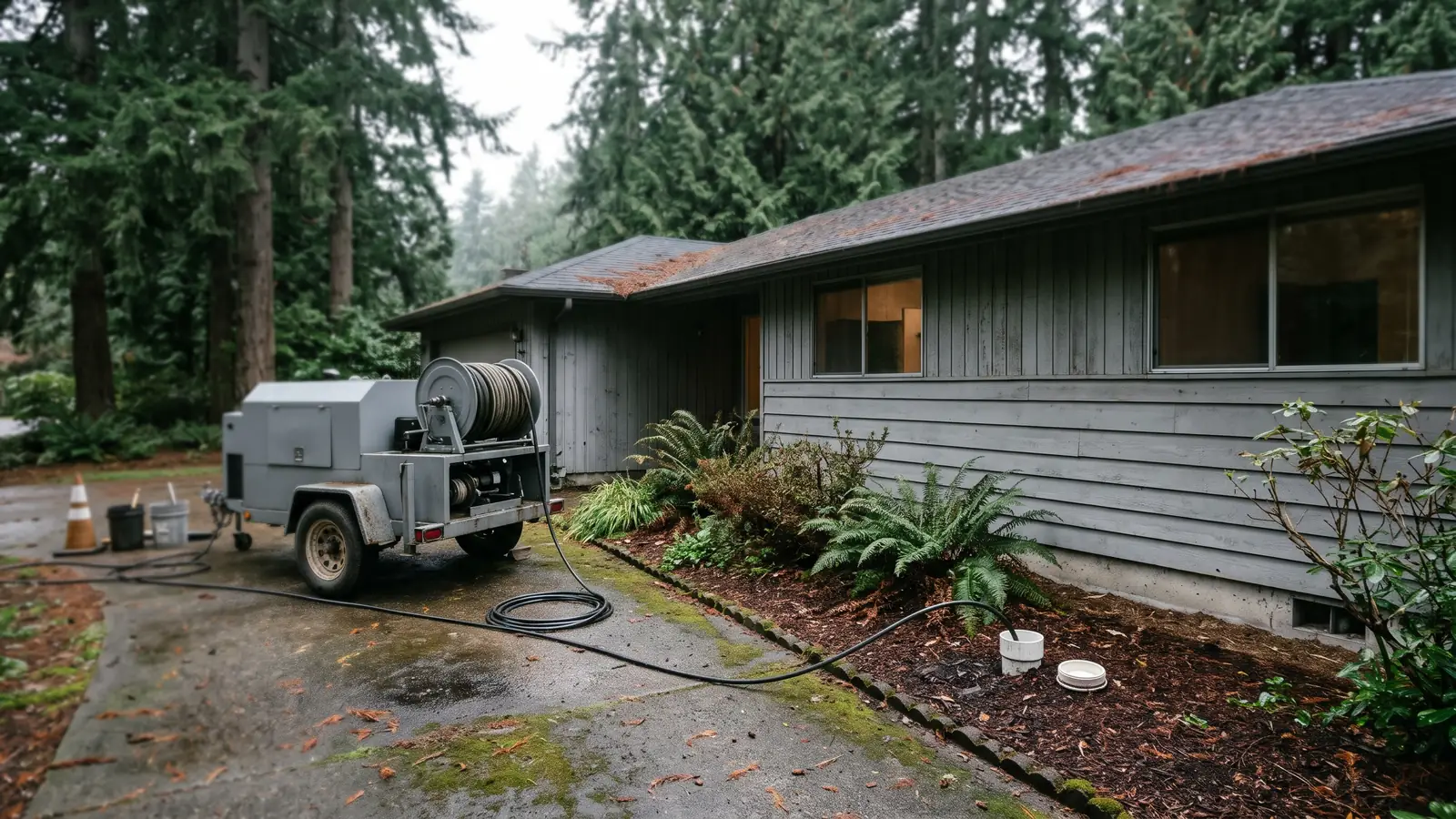
Storm Drainage on Kent Commercial Lots
Everything here carries rain off pavement and roofs. Kent requires private storm systems to be maintained to its Surface Water Design Manual, which adopts King County's 2021 manual with Kent amendments. Kent made no changes to its maintenance appendix, so the King County cleaning triggers below apply here as written.
Parking-Lot Catch Basins and Sumps
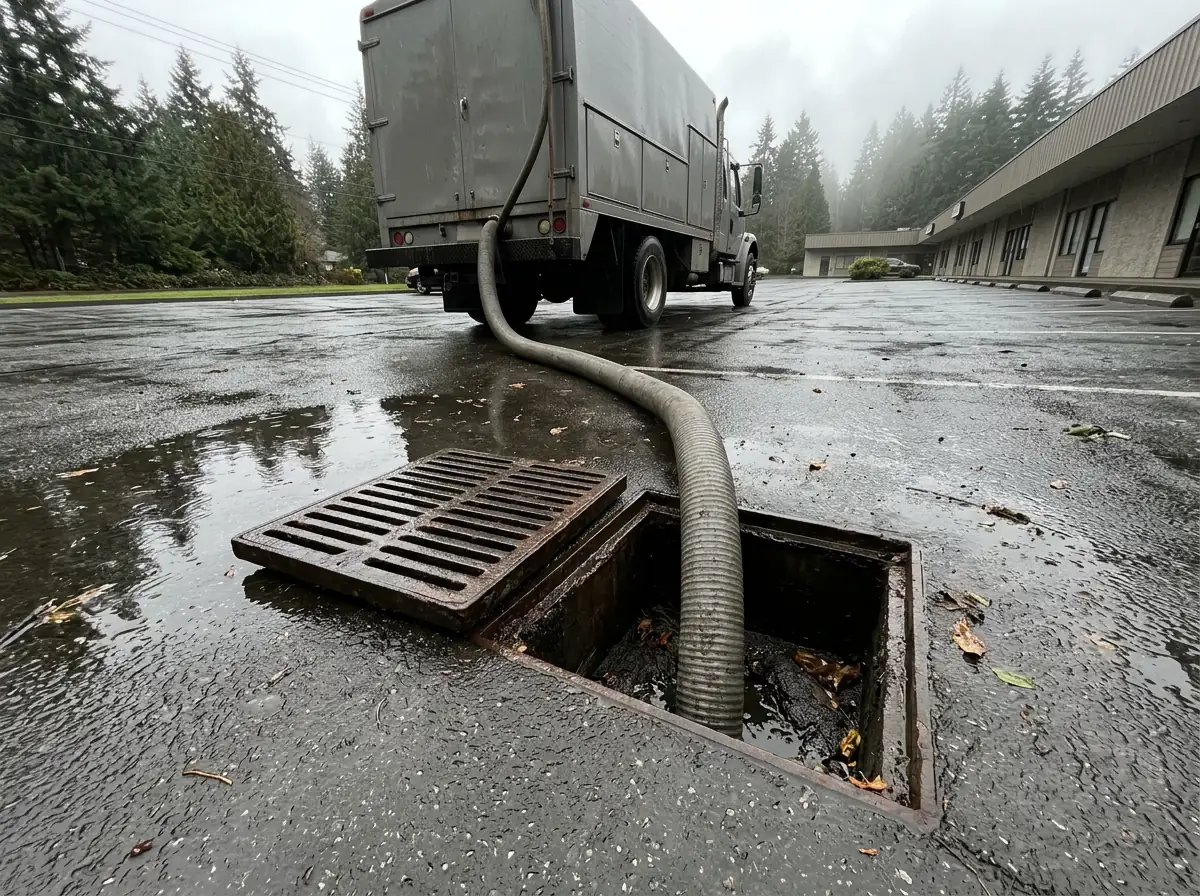
A catch basin's sump sits below its outlet pipe to trap sediment before it moves on. King County's standard sets these triggers:
- Sediment: more than 60% of the depth from the basin floor to the lowest pipe, or within 6 inches of that pipe.
- Trash at the grate: more than half a cubic foot in front of the opening, or blocking over 10% of capacity.
- After cleaning: no sediment left in the sump.
Storm Lines Between Basins
Clark County's program points out that clean basins keep sediment from building up in whatever lies downstream. King County calls a storm pipe due for cleaning when sediment or debris fills more than 20% of its diameter, or when roots slow the flow. Clark County's program lists line jetting as a separate service from the basin cleanout, so ask for both in the quote, and for the loosened material to be pulled back to a basin and vacuumed out. The storm drain discharge rule applies to every foot of it.
Trench Drains at Loading Docks
Find out where a dock's trench drain goes before it's cleaned. If it runs to the storm system, Kent's prohibited list matters more here than anywhere else on the lot: petroleum products that leave a visible sheen, antifreeze, solvents and degreasers, and steam-cleaning waste are all banned from it. A trench that runs to the sanitary sewer instead falls under the building's commercial drain cleaning.
Private Detention and Water-Quality Facilities
Larger sites hold runoff in underground tanks or vaults before it leaves the property. King County's standard for those:
- Tank or vault: clean when sediment is deeper than 10% of the diameter along half its length, or 15% at any point. A 72-inch tank is due at about 7 inches.
- Inlet and outlet pipes: clean at 20% full.
Why Kent homeowners and businesses call Kent Hydro Jetting
- The request is free, and you decide whether to book
- One licensed local plumber gets your request, not a call list
- Ask for a camera look before any pressure goes in
- Ask for the price in writing before the work starts
- You pay nothing for the referral
Kent Rules for Private Storm Systems
Who maintains it
Kent's utility owns the public system in the right-of-way and in easements or tracts it has accepted. A privately built facility stays private unless the city accepts it under the conditions in KCC 7.05.040.To what standard
all storm systems, public or private, are maintained to the Kent Surface Water Design Manual, and the city may inspect them.Inspections
the city can check private facilities on a routine, random or complaint basis, and can ask for maintenance and repair records.Rate credits
a commercial parcel with a credited onsite facility keeps the credit only while the owner maintains it to the manual's standards.Permits
building, installing or modifying a storm drainage structure needs a Kent permit before work starts. Routine cleaning isn't on that list, but a cracked basin or a replaced pipe is.