
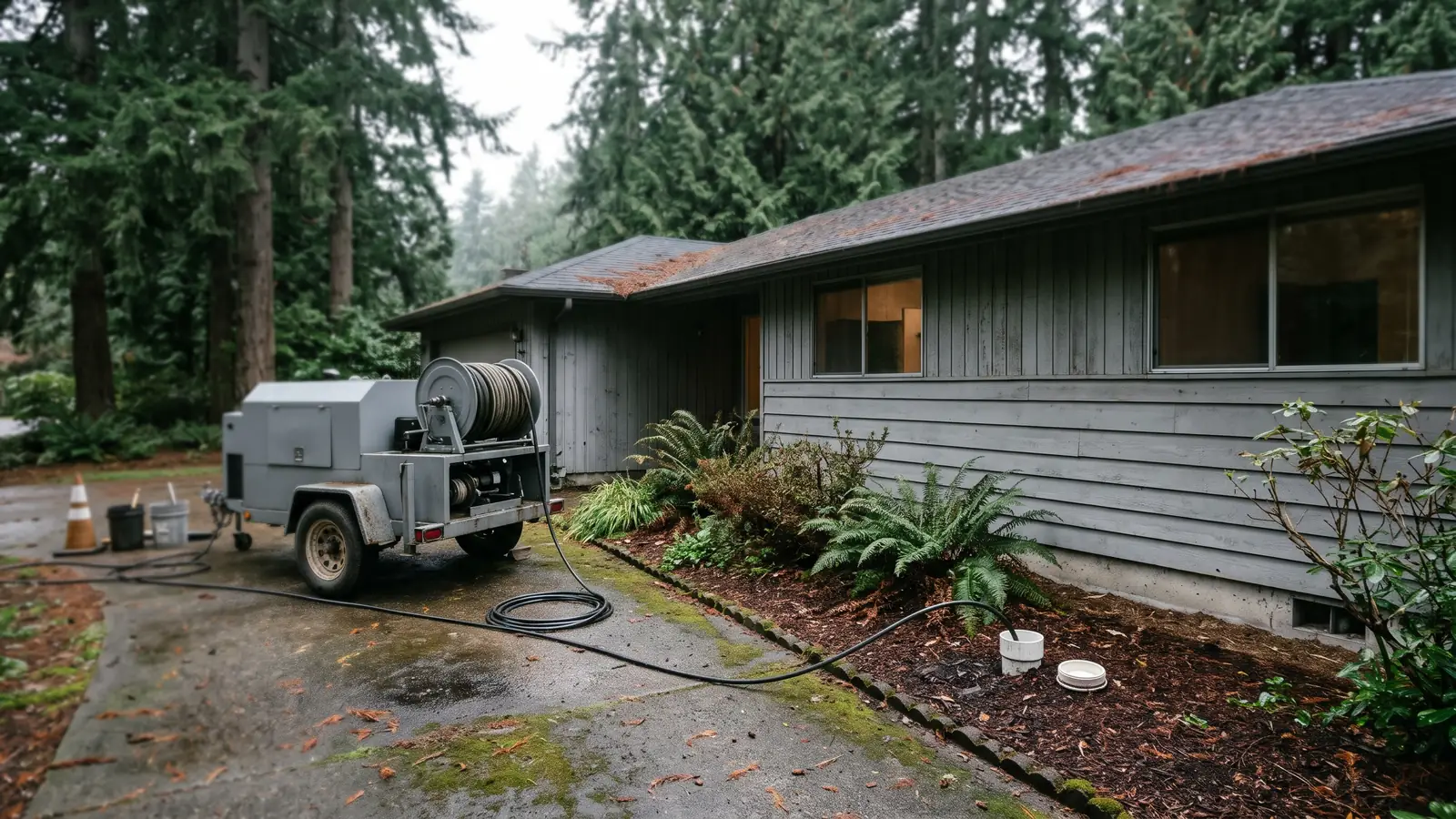
Sewer Root Removal Methods in Kent Side Sewers
King County notes that tree roots commonly get into side sewers and cause clogs and overflows. The method, and what the camera finds afterward, decides how long the line stays clear.
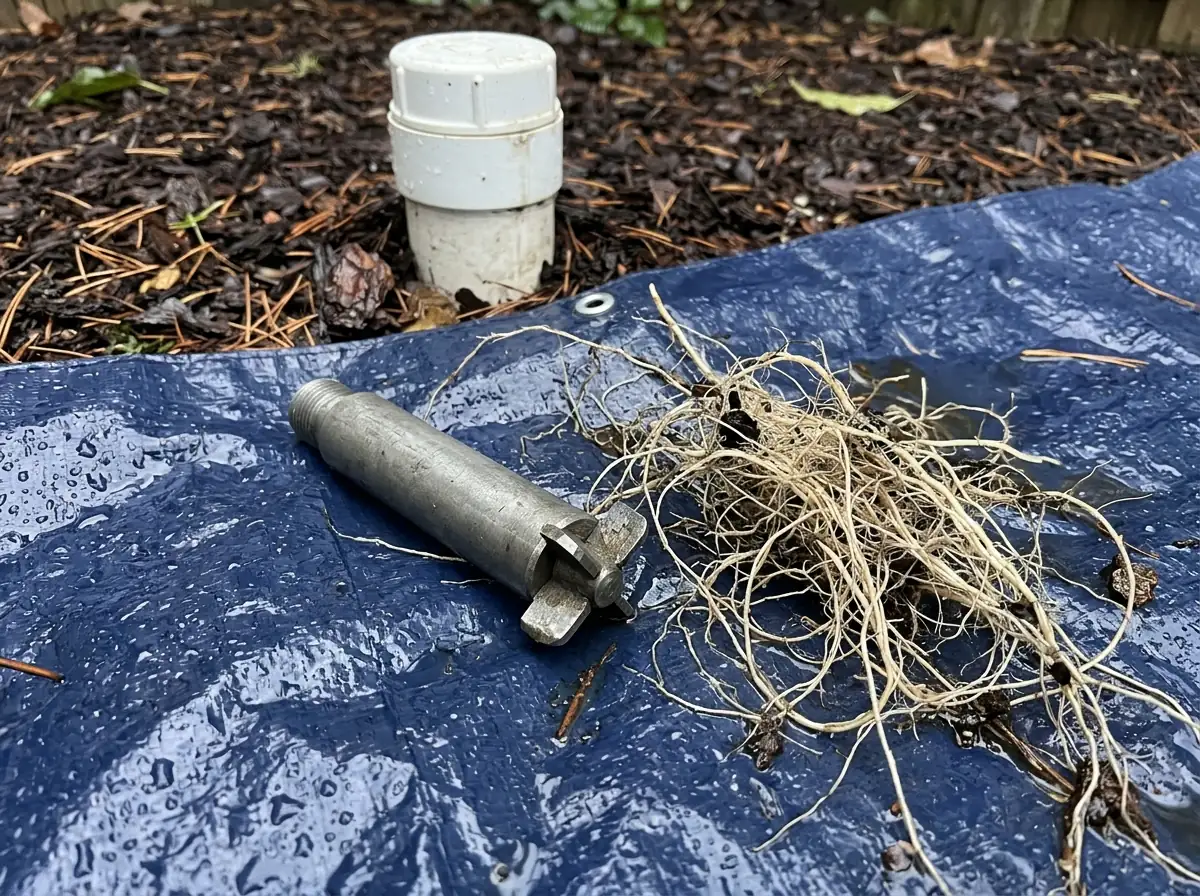
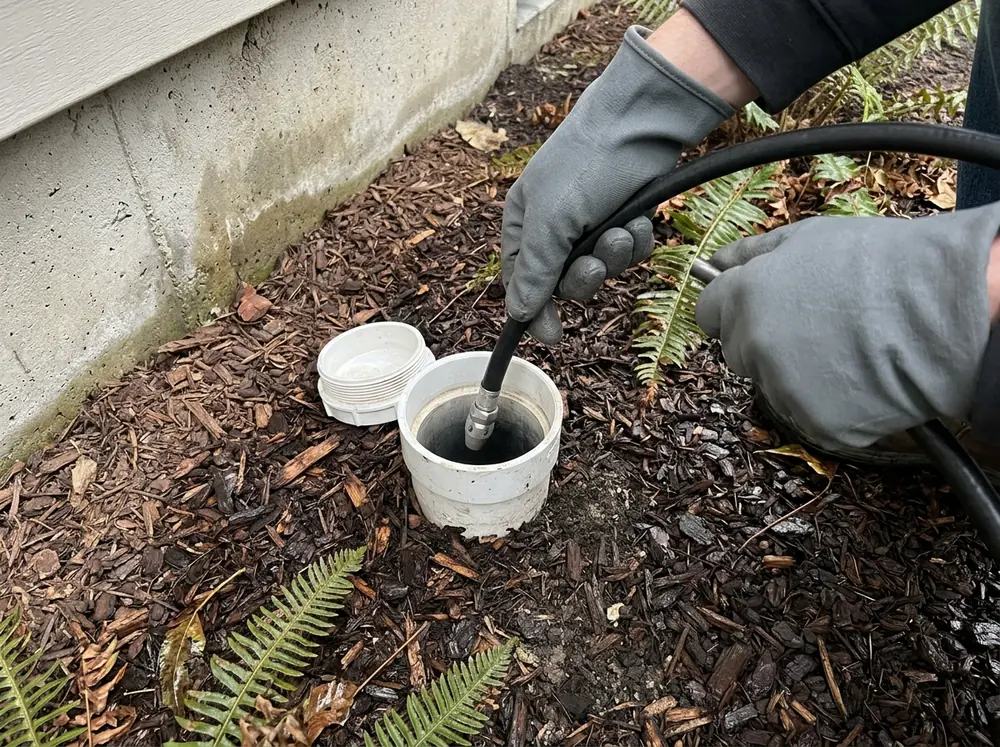
Root Cutter Nozzles on a Jetter
A root cutter nozzle is a jetter head built to cut roots, grease and scale, according to trade guidance on nozzle selection. RIDGID notes that the hose scrubs the pipe as it is pulled back, which helps clear what the cutter loosens. HomeGuide says the nozzle should be picked after the camera has shown the clog, so the plumber knows whether a penetrating head has to open the line first.
Mechanical Cable Root Cutting
HomeGuide's sewer cleaning guide describes the cable method as a flexible metal cable with a blade attachment, turned by a motorized auger. Once a camera confirms roots, it says plumbers often combine a heavy-duty auger, or a jetter with a cutting attachment, to get them out. The same guide notes that a cable opens a hole through a blockage without clearing the pipe walls, so ask whether a jetting pass will follow the cut. Snaking prices are on the drain cleaning page.
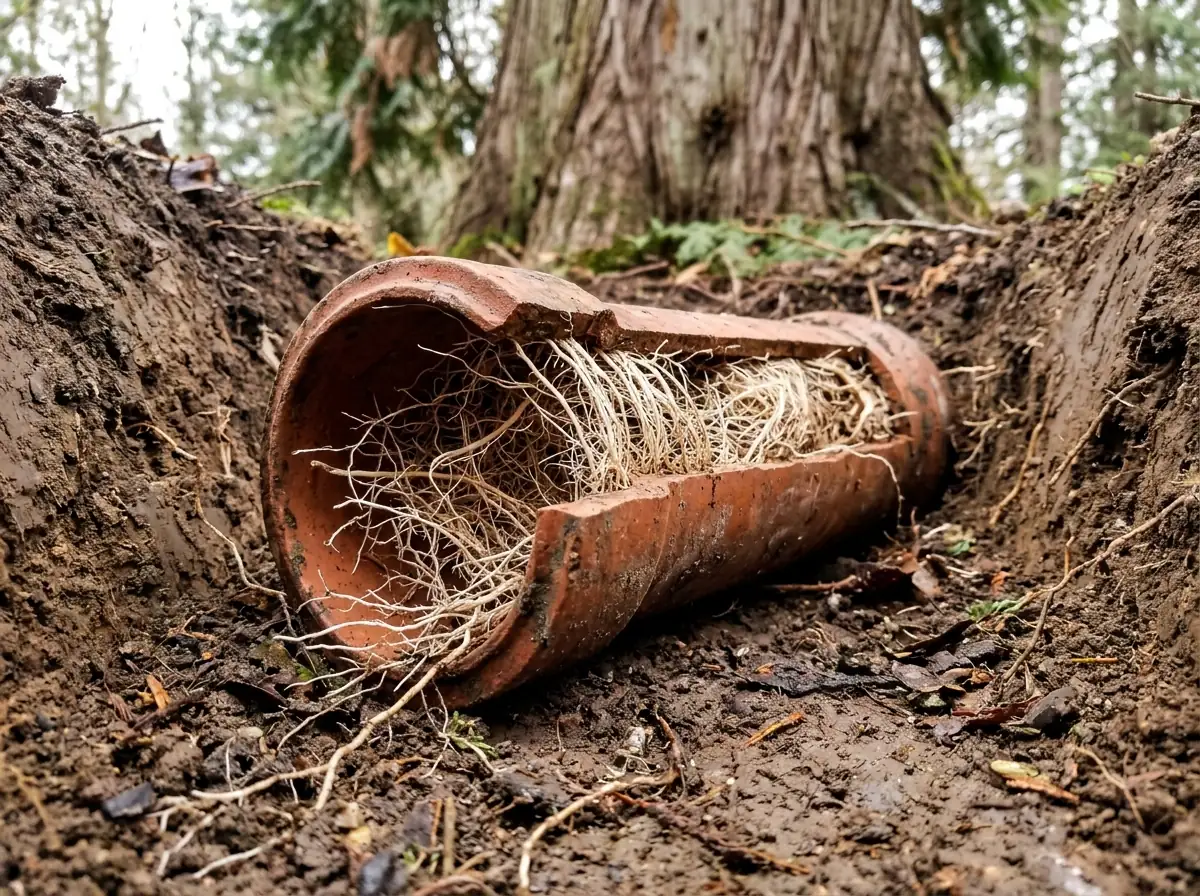
Roots at Joints in Clay and Concrete Side Sewers
Roots go where the water is. A 2001 review of root intrusion in sewer systems, from a US Forest Service research station, lists the conditions that invite damage: old pipes with joints, shallow pipes, small-diameter pipes and fast-growing trees. King County's list of side sewer materials runs from clay, brick and concrete to iron and plastic, and the pipe is often as old as the house. HomeGuide adds that roots push in through hairline cracks and turn up mostly in older cast iron and clay, less often in newer PVC. Older clay and Orangeburg pipe also needs gentler pressure; the cast iron descaling page covers how condition limits jetting.
Regrowth and Re-Cut Schedules
Cutting clears the pipe but doesn't seal it, so the roots come back through the same gap. The Forest Service review found that in smaller-diameter pipes, root removal every year or every other year is common. That review looked at public sewer systems rather than single house lines, so read it as a rough guide. Figures to plan around:
- HomeAdvisor: shorten the 18- to 24-month maintenance cycle for homes with many trees
- Angi: put a camera down the line every year or two
Have the plumber write down the footage reading where the roots sat. If the next camera run finds them at the same spot, that joint is the one to fix. The sewer line cleaning page sets out the routine schedule.
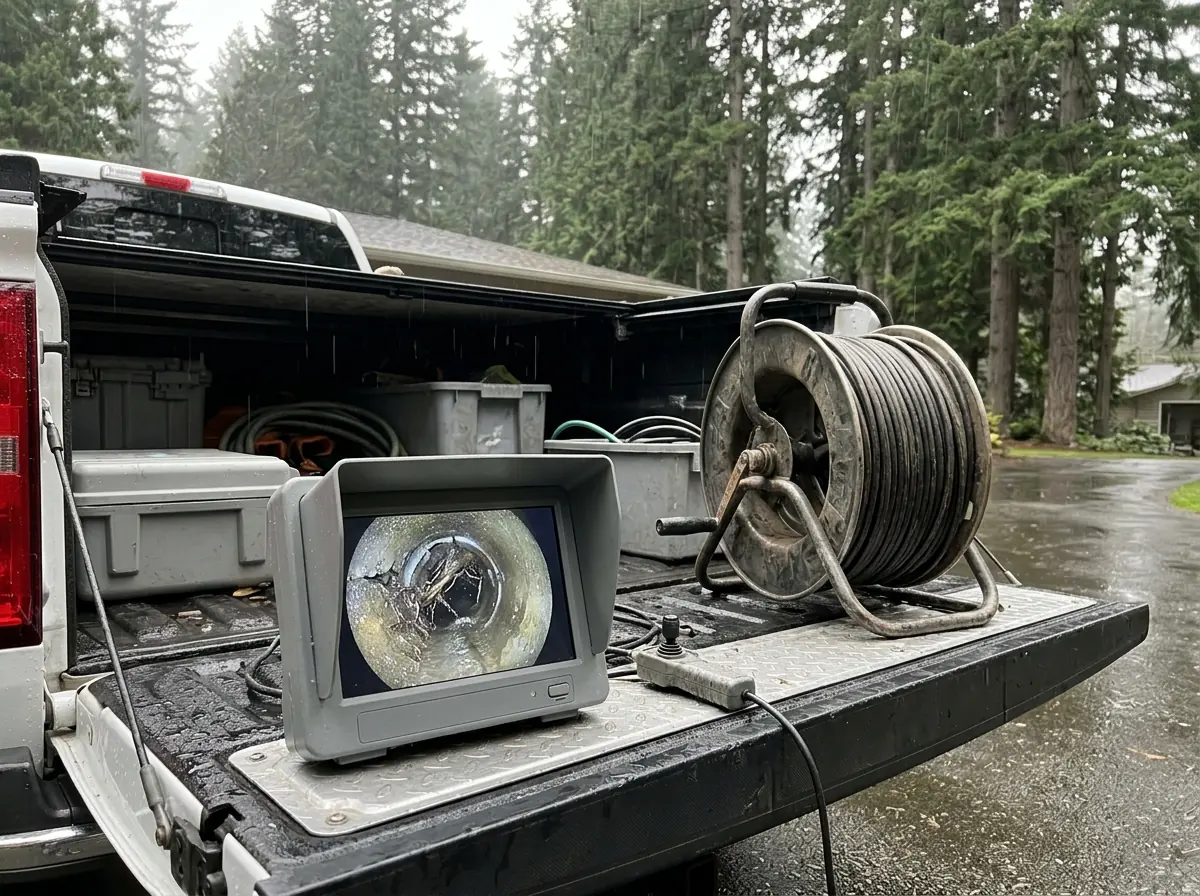
When Roots Mean Repair Instead
HomeGuide says plainly that jetting can't fix structural problems. A camera can show cracks, offset joints where settling pulled sections out of line, and, less often, a collapsed run in an old neglected line. Roots that return fast through the same crack, or a pipe they have broken open, point to repair. Across sewer systems in general, the Forest Service review puts root removal at about one sixth the cost of replacing pipe because of roots. For a line that's failing, the sewer line repair page covers spot repairs, lining and replacement.
Why Kent homeowners and businesses call Kent Hydro Jetting
- The request is free, and you decide whether to book
- One licensed local plumber gets your request, not a call list
- Ask for a camera look before any pressure goes in
- Ask for the price in writing before the work starts
- You pay nothing for the referral
Root Removal Prices in the Cost Guides
No guide gives a Kent-only price. The figures below are the nearest published ones; the plumber's estimate is what counts.
| Root job | Guide range | Guide |
|---|---|---|
| Dedicated root cutting, added to the jetting bill | $100 to $600 | Angi, HomeAdvisor |
| Root removal added to a sewer cleaning | $200 to $600 or more | HomeGuide |
| Heavy clog or tree roots, jetted, Seattle | $700 to $800 | Angi |
| Chemical root treatment | $50 to $300 | HomeGuide |
HomeGuide's cost factors for a main line clog apply here: how severe it is, how easy the line is to reach, and how long it runs. A camera run before and after adds to the bill, and the camera inspection page lists those prices. Kent's ban on planting poplar, cottonwood, soft maples and willow near sewers is worth remembering before anything new goes in above the line.