
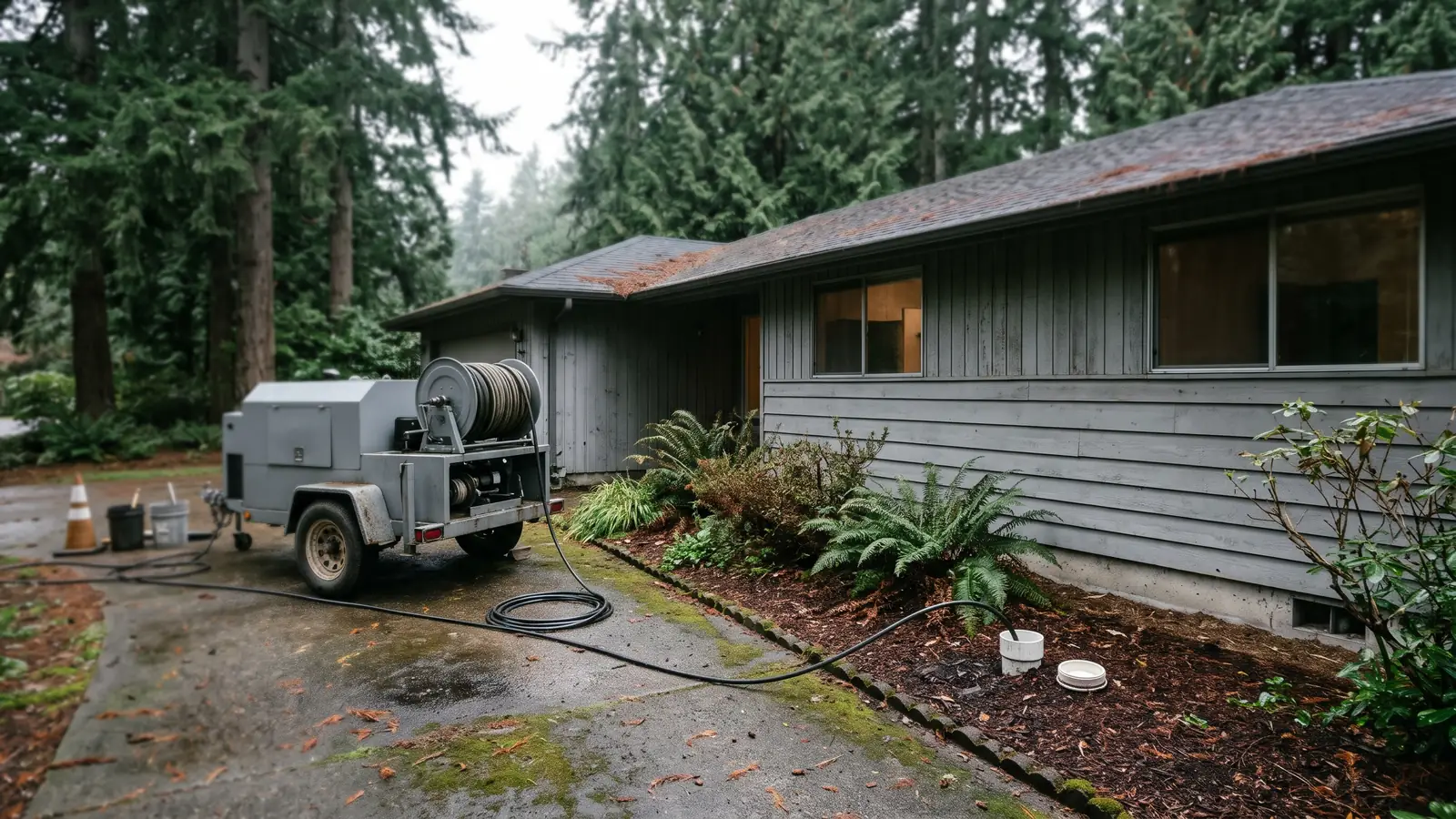
Grease Trap and Line Cleaning Jobs in Kent Kitchens
Under KCC 7.04.180, any Kent business that generates fats, oils and grease, restaurants included, must install and keep up a grease removal device of an approved type and adequate size, so the grease stays out of the public sewer. Two device types and the pipe between them make up most of the work.
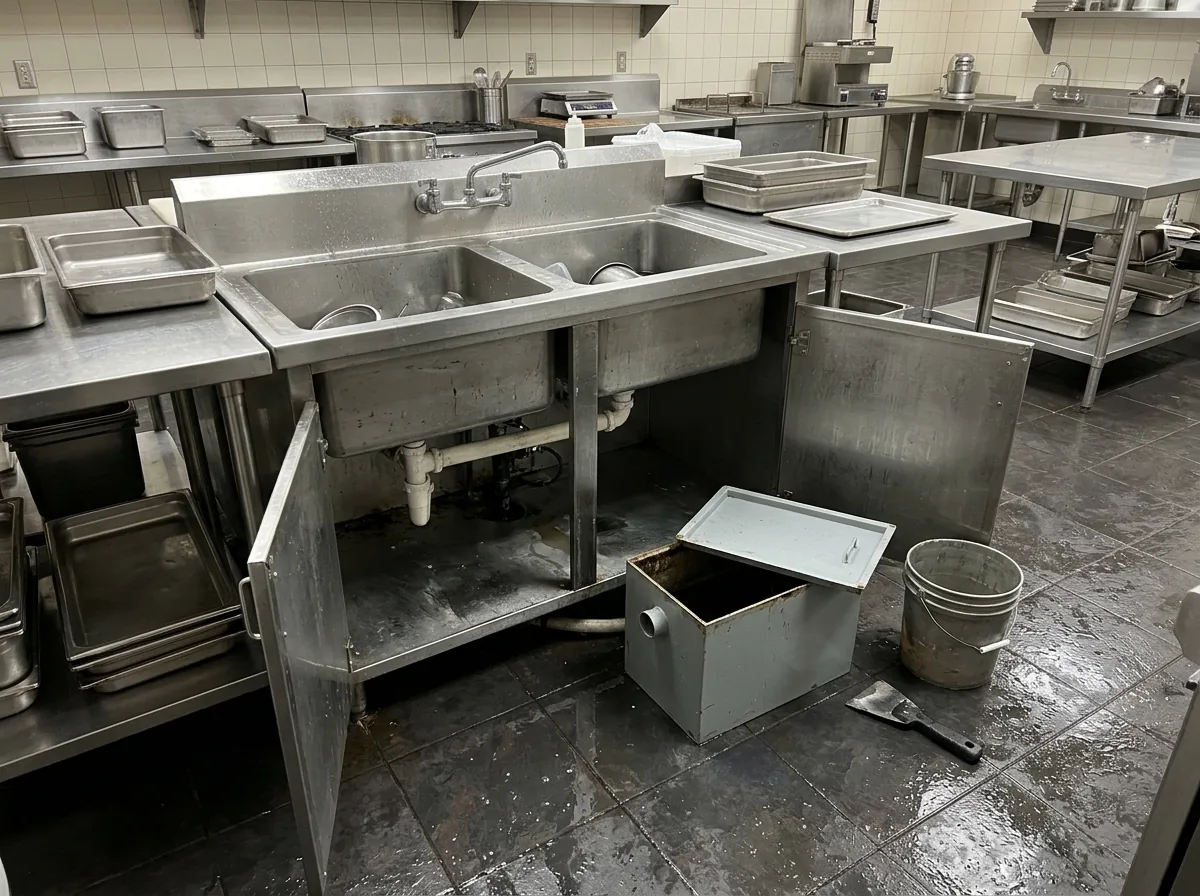
Grease Traps Under the Sinks
In Kent's code, a grease trap means a hydromechanical interceptor, identified by its flow rate, separation and retention efficiency. The trigger for cleaning is a quarter of its effective liquid volume taken up by grease and settled solids, or build-up at the inlet, outlet, flow control or vent; the floor is once a month. A proper cleaning, per the code:
- Removes the full contents: grease, liquid and settled solids
- Takes out and cleans removable baffles, plugs and outlets
- Scrapes the walls and cleanout free of grease and food waste
- Checks seams, gaskets, lids and baffles, then refills the trap with cold, clean water
Washington's Department of Health, in its guidance for kitchens on large septic systems, goes further: clean under-sink traps weekly, and more often if they're more than half full.
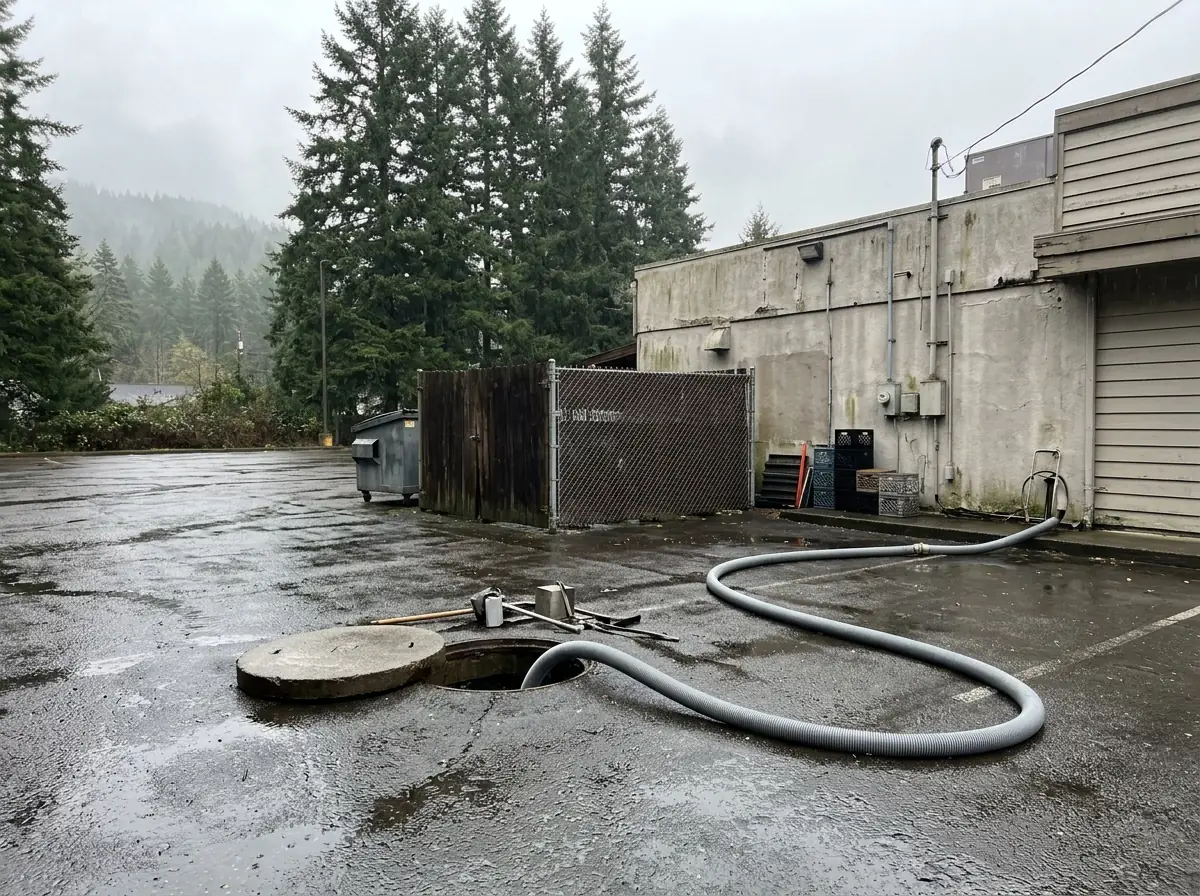
Interceptor Tanks Outside the Kitchen
A gravity grease interceptor, as Kent defines it, is often a below-ground unit outside the building, built as a two- or three-chamber baffled tank. It has to be cleaned at 25% grease and solids or when the inlet or outlet shows build-up, and never less than every six months. The code requires the whole contents to come out of the walls, baffles, inlet, outlet tee, piping and floor. Skimming the top layer or a partial clean is a violation in itself. The tank is checked for damage and leaks, refilled with clean cold water, and any repair follows within seven days. Kent says this work is done by a licensed contractor and/or a qualified wastehauler.
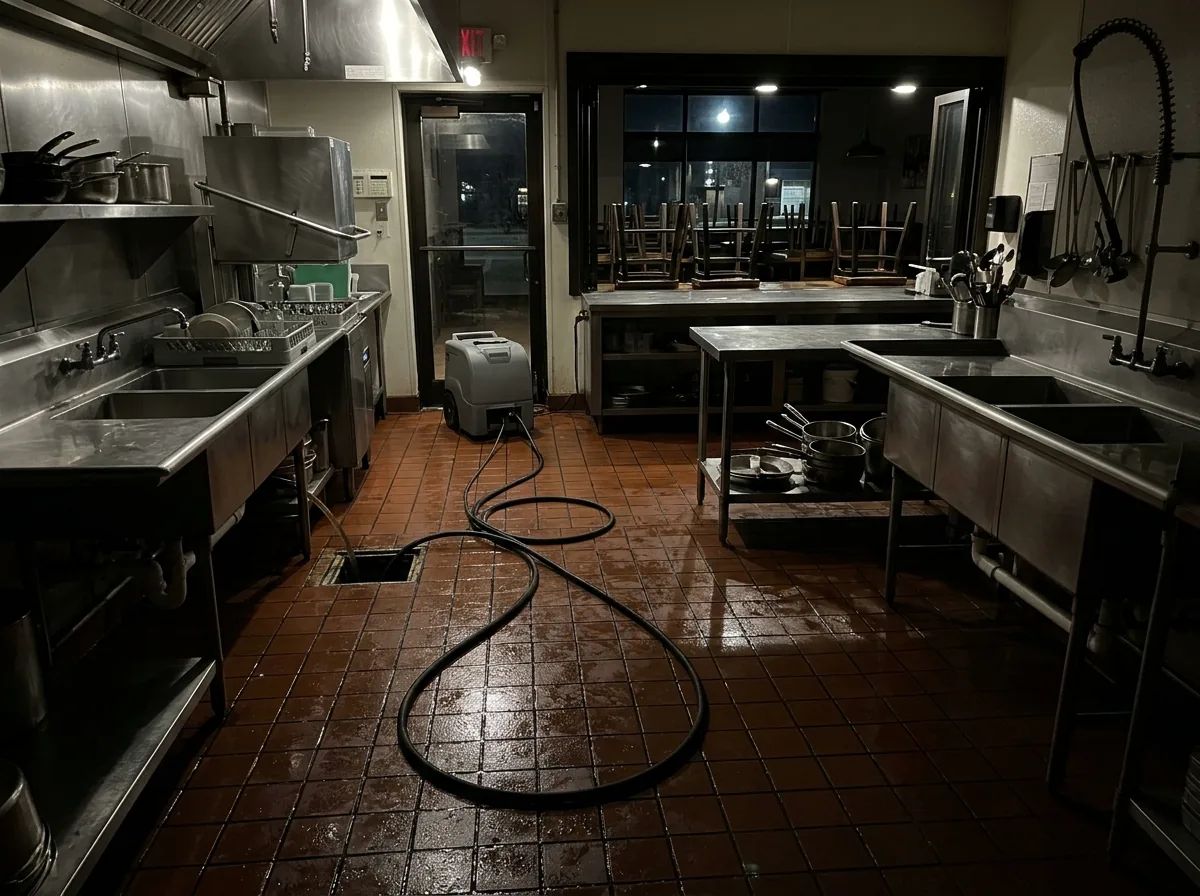
Grease Line Jetting Between Pump-Outs
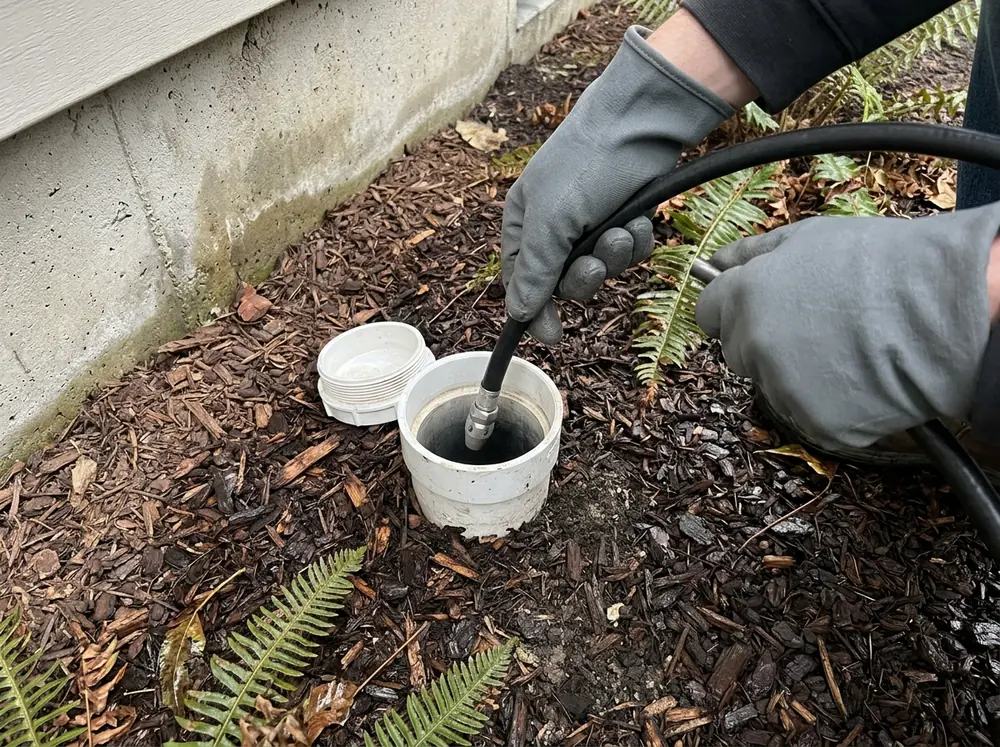
The device catches grease, but the pipes ahead of it collect it first. HomeGuide singles out restaurants for constant grease build-up and puts commercial jetting on a 3- to 12-month cycle. On the way out of the pipe, RIDGID notes, the jetter hose power-scrubs the line and flushes the debris along. Water temperature matters too: the Department of Health advises keeping sink and dishwasher water under 140°F, because hotter water dissolves grease that then hardens again further down the pipe. Grease left to build up in a side sewer is a Kent code violation on its own, which the kitchen drain page covers.
Records and Banned Additives Under Kent's FOG Rule
Kent's rule is as much about paperwork and chemistry as about pumping:
- Records: keep a record of every maintenance event and make it readily available to the city, by email or in person.
- Banned additives: no emulsifying agent, enzyme, bio-additive or similar chemical may be discharged to the sewer.
- Grease limit: no wastewater with more than 100 parts per million of grease by weight.
- Used cooking oil: collect it in watertight drums or bins and recycle or dispose of it lawfully.
- More often if needed: the city can require more frequent cleaning to match how the kitchen actually runs.
The Department of Health's advice to witness every trap or interceptor cleaning is worth adopting too, so you know the full pump-out was done.
Why Kent homeowners and businesses call Kent Hydro Jetting
- The request is free, and you decide whether to book
- One licensed local plumber gets your request, not a call list
- Ask for a camera look before any pressure goes in
- Ask for the price in writing before the work starts
- You pay nothing for the referral
Planning Grease Work: Schedule and Cost
The schedule is set partly by code and partly by how hard the kitchen runs:
| Task | Minimum or guide interval | Source |
|---|---|---|
| Under-sink grease trap | At least monthly, or at 25% full | Kent KCC 7.04.180 |
| Gravity grease interceptor | At least every six months, or at 25% full | Kent KCC 7.04.180 |
| Commercial jetting, general (not grease-specific) | Every 3 to 12 months | HomeGuide |
No cost guide we found publishes a dated price for grease trap pumping or for jetting a restaurant's grease line. HomeGuide's general commercial jetting range, $500 to $2,000 or more, is the nearest figure, and the commercial drain cleaning page explains what drives it. Ask the hauler and the plumber for separate written quotes, and ask whether line jetting can be booked the same day as the pump-out. A new or relocated device also needs a plumbing permit and final inspection before it goes into service.