
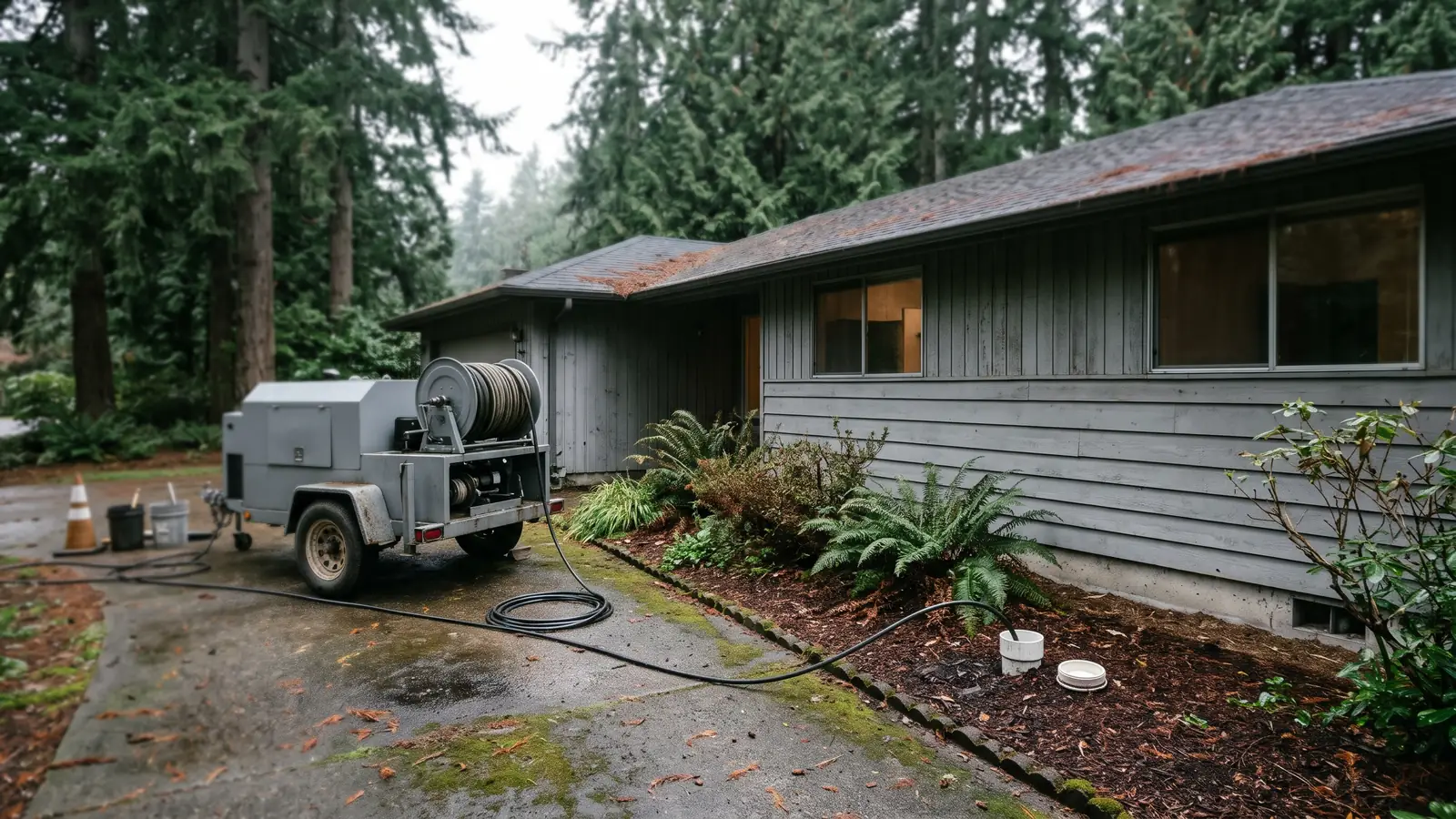
Septic Lines a Jetter Can Reach
Homes in and around Kent that aren't on public sewer fall under King County's on-site sewage code (Board of Health Title 13). That code splits the system into parts, and who may work on each part differs.
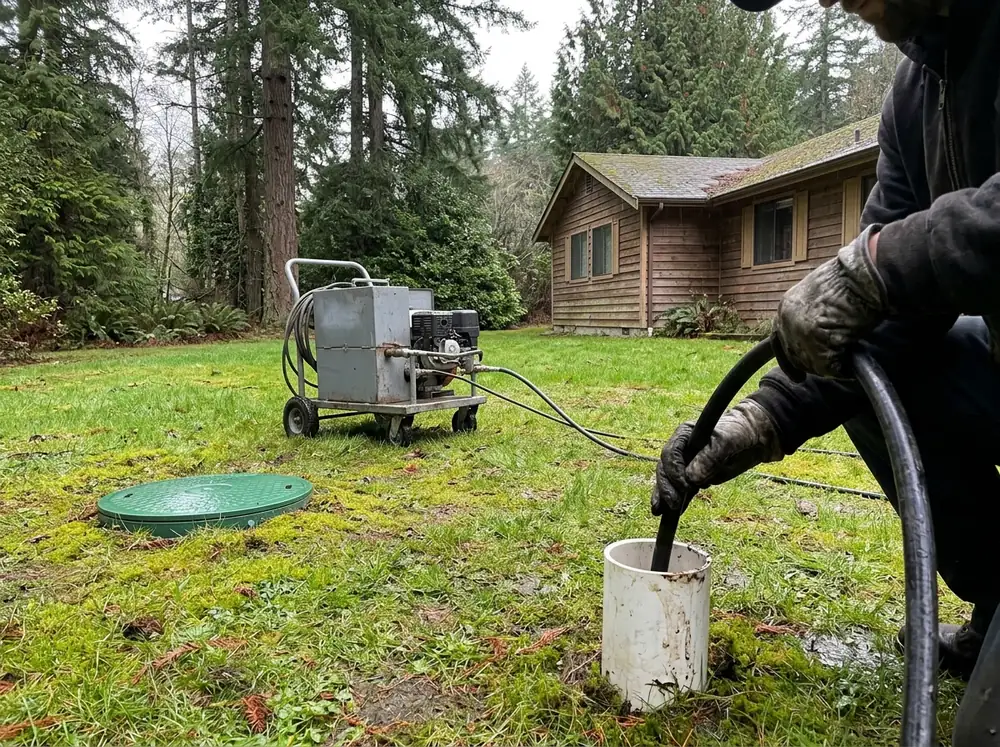
House-to-Tank Line
This is the building sewer, the stretch of a septic system closest to ordinary drain work. King County's specs for it:
- Size and material: at least 4 inches inside, cast iron or plastic.
- Slope: no less than 1/8 inch per foot.
- Access: one cleanout between the house and the tank with access to grade, and on a 4-inch line, cleanouts no more than 50 feet apart.
Clearing a clog isn't on the code's minor-repair list. Replacing a broken section is different: the code lists building sewer pipe among the "minor repairs" that need a maintainer's certificate, though certified pumpers may repair building sewer tightlines.
Effluent Line and Outlet Filter
The pipe from the tank to the distribution box has to be plastic or cast iron with watertight joints. Where a tank has an effluent filter at that end, the code requires access to it at finished grade, and its inspection table recommends cleaning a screened outlet baffle once a year. HomeGuide puts filter cleaning at $100 to $400.
Distribution Box and Drain Field Laterals
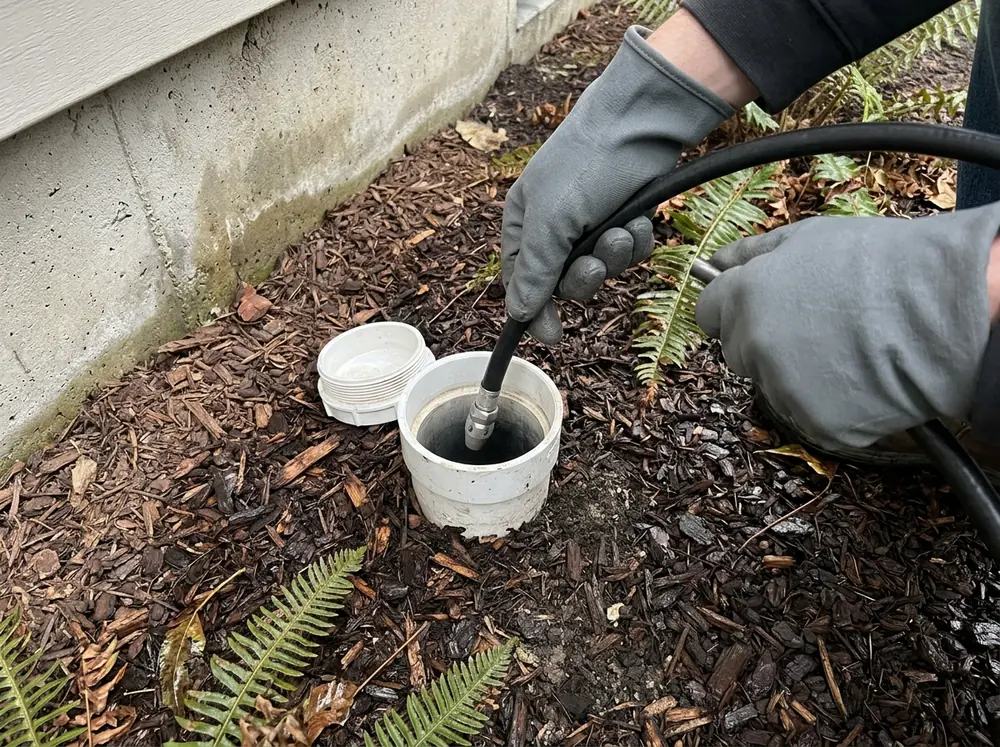
A drain field starts at an inspection or distribution box, and King County's code requires a monitoring port of at least 4 inches in each lateral. Gravity lines may not run longer than 100 feet. Jetting the hard plastic or PVC laterals of a gravity field counts as a minor repair under the code. That work needs an on-site system maintainer (OSM) certificate, unless the resident owner is doing it on their own gravity system.
Pressure-Distribution Laterals
Pressure distribution falls in the code's "public domain technology" group, with mounds and sand filters. Three rules apply to it:
- Who inspects: only a licensed maintainer, never the owner.
- How often: annually under the code's table. King County's septic page says every 6 months for these systems, so ask Public Health which applies to yours.
- Jetting: jetting pressure distribution pipes is a minor repair, so it also needs the OSM certificate.
Why Kent homeowners and businesses call Kent Hydro Jetting
- The request is free, and you decide whether to book
- One licensed local plumber gets your request, not a call list
- Ask for a camera look before any pressure goes in
- Ask for the price in writing before the work starts
- You pay nothing for the referral
King County and Kent Rules for Septic Owners
Owner's duty
Kent's code makes an on-site system the sole responsibility of the owner and occupant, and bars it from discharging to the public sewer.Sewer connection
if a Kent public sewer main sits within 200 feet of a building on the property, the city can order a connection within 90 days of official notice.Tank checks
King County requires the owner to check sludge and scum levels at least every 3 years, or every year with a garbage grinder, and to have the tank pumped by an approved pumper when needed. Pumpers need their own county certificate.Drainage
footing and roof drains must point away from the system (footing and downspout drains).Failures get reported
a county certificate holder who sees effluent surfacing or sewage backing into a house has to report it within five business days.Selling
the seller books a licensed maintainer's inspection before title transfers. The code waives it if one was done in the past 12 months; the county's sales page says 6 months, so confirm with Public Health before relying on an old report.