
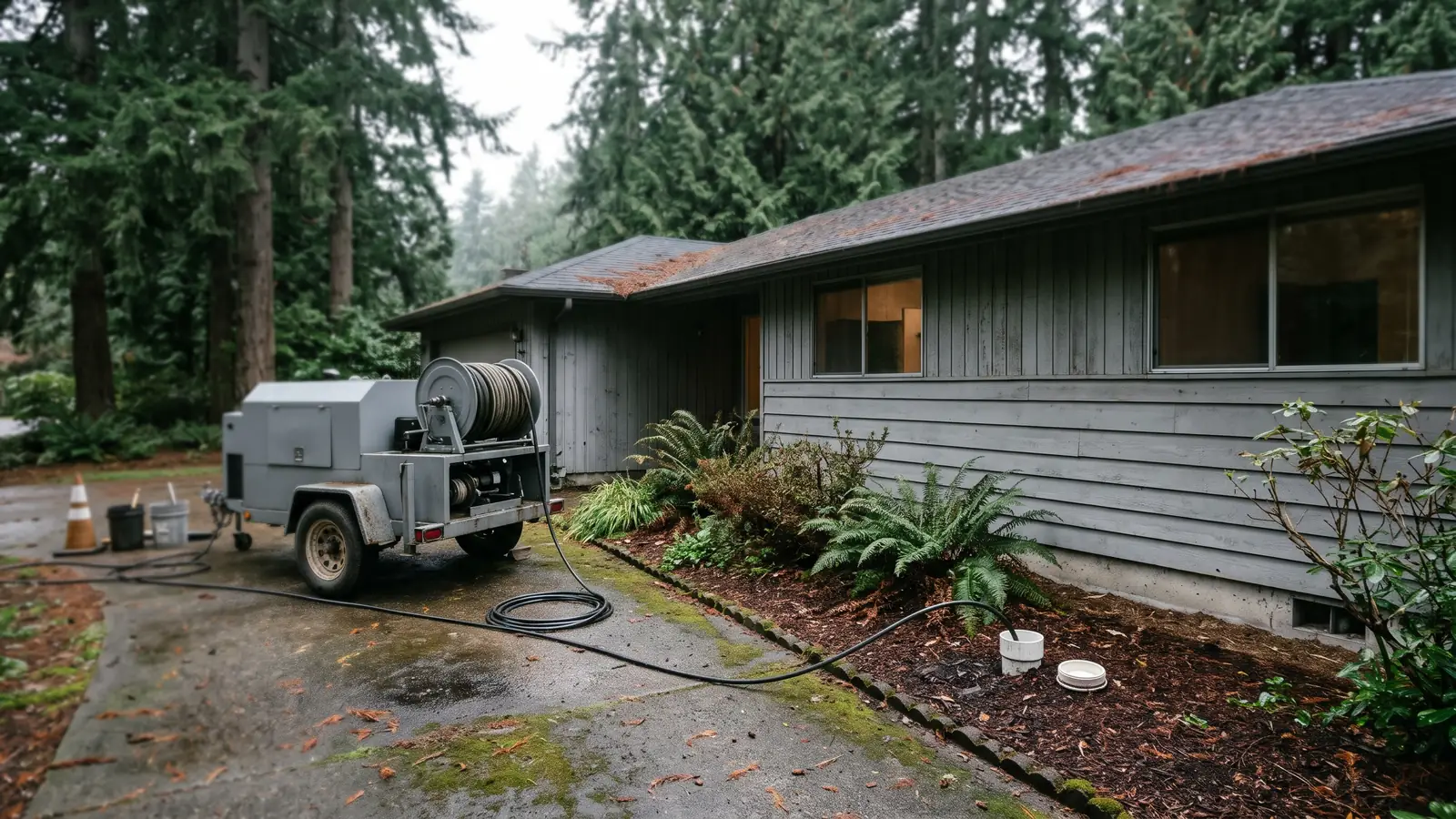
Repair Methods for a Damaged Side Sewer
Jetting can't mend a cracked, collapsed or sagging pipe. Once the camera shows damage, the choice is between digging at one spot, building a new pipe inside the old one, or replacing the run.
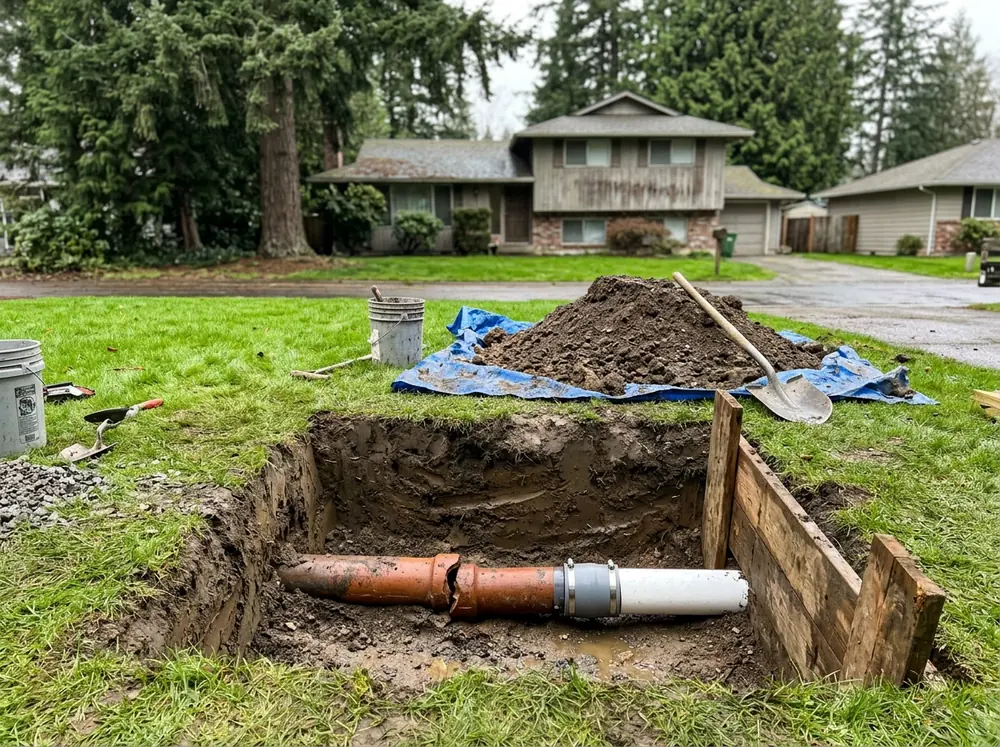
Fixing One Bad Joint With a Spot Dig
A spot repair fits a defect at one place: an offset joint, a short collapsed section, or roots that keep coming back through a single gap. A hole is dug over the problem and that section is replaced. HomeAdvisor's figures:
- Broken or cracked section repaired: $600 to $1,050.
- Partial replacement: from about $50 a foot.
The camera's distance reading and an above-ground locate tell the crew where to dig.
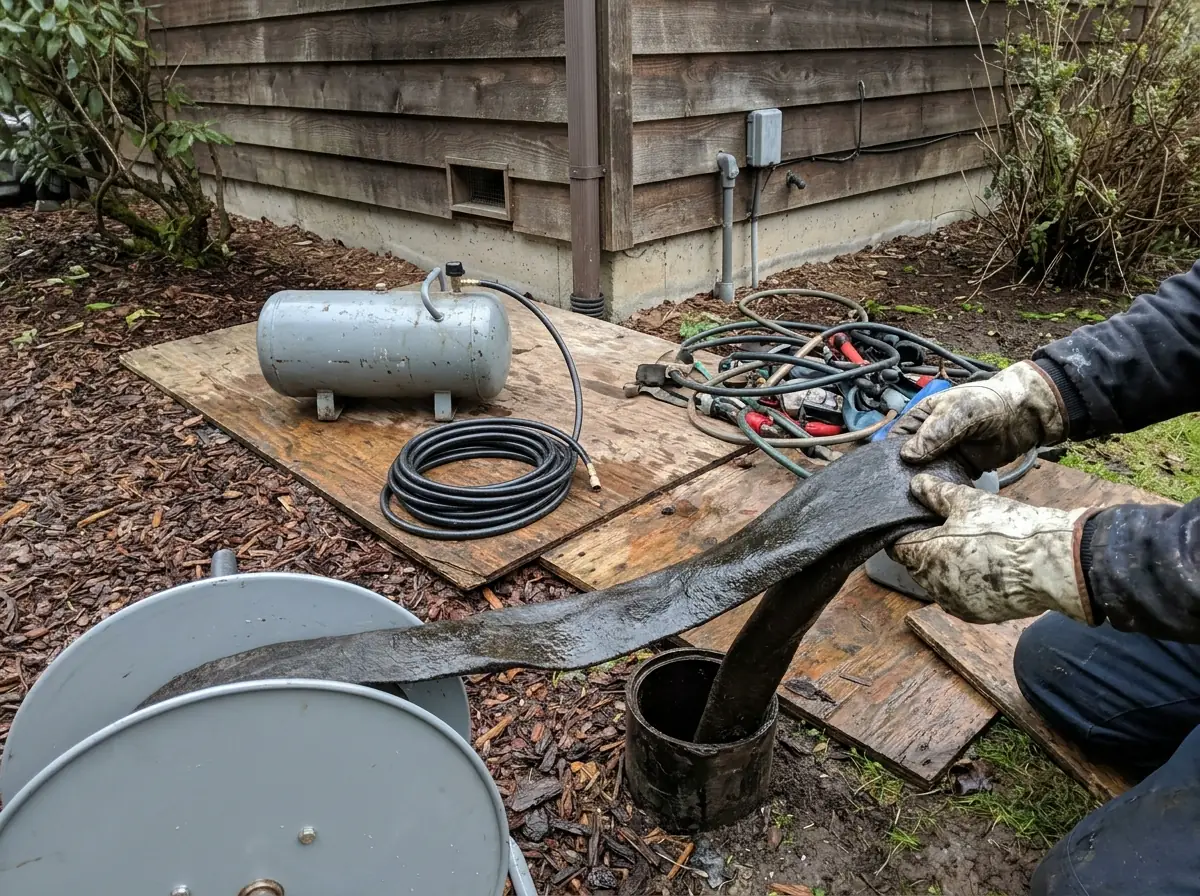
Cured-in-Place Lining and the Jetting Before It
Cured-in-place pipe (CIPP) lining pulls a resin-soaked felt tube into the old pipe, inflates it to the pipe's shape and cures it hard, leaving a seamless pipe inside the original. HomeAdvisor says it needs only one excavation point, and both guides put it at $90 to $250 a foot. Two limits apply:
- Collapsed pipe: HomeAdvisor says trenchless methods are possible only when the pipe hasn't collapsed.
- A clean host pipe: Bellevue's relining conditions, a nearby example, require the old pipe to be cleaned, root cut and jetted first, with a camera run after cleaning. The same conditions say lining can't make significant changes to line and grade, so sags may remain and need more frequent maintenance.
That prep is the jetting part of a lining job. It's the same work as side sewer cleaning, done to a stricter standard.
Bursting a New Pipe Through the Old One
Pipe bursting pulls a new pipe through the line while a pneumatic or hydraulic head breaks the old one apart ahead of it. Seattle Public Utilities notes it needs an access pit at each end, but little digging between them. HomeGuide and HomeAdvisor both put it at $60 to $200 a foot.
Replacing the Side Sewer Out to the Street
When defects run along many sections, the old pipe is dug up and replaced, which Seattle Public Utilities calls open-cut construction. HomeGuide's figures by length:
- 20 feet: $1,000 to $5,000.
- 40 feet: $2,000 to $10,000.
- 80 feet: $4,000 to $20,000.
Under a slab, HomeAdvisor adds $300 to $350 a foot for breaking and restoring concrete. In Kent the owner's responsibility runs to the tee at the public main, so a full replacement can reach into the right-of-way (side sewer ownership).
Why Kent homeowners and businesses call Kent Hydro Jetting
- The request is free, and you decide whether to book
- One licensed local plumber gets your request, not a call list
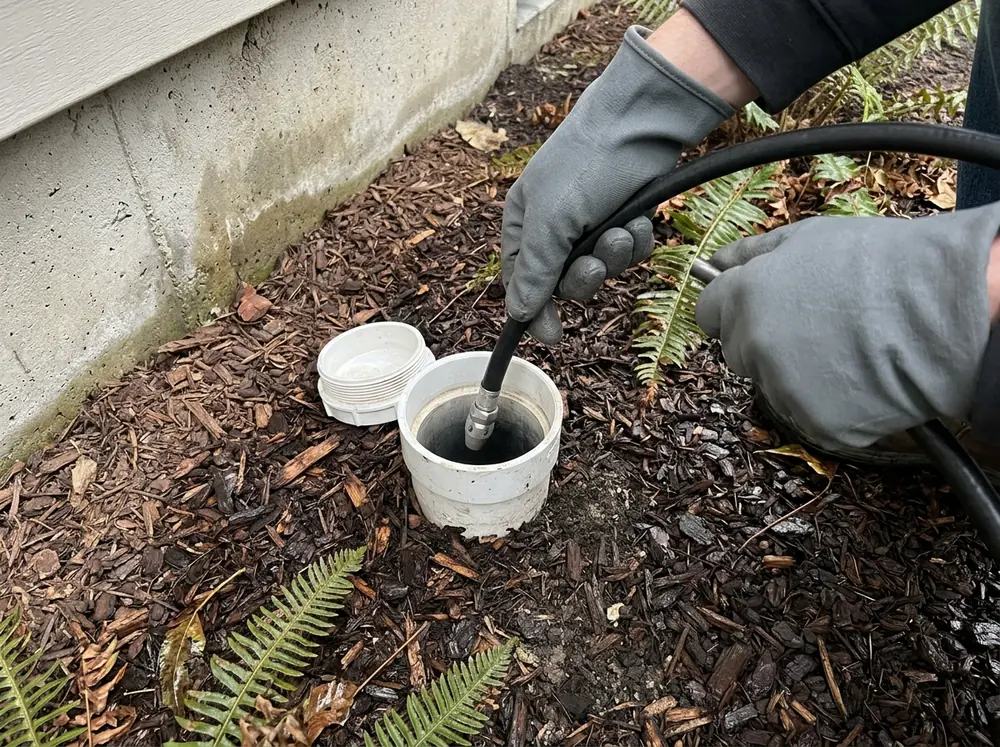
- Ask for a camera look before any pressure goes in
- Ask for the price in writing before the work starts
- You pay nothing for the referral
Kent Permits, Contracts and Payment
Kent's code draws the line by the kind of work:
Repairs need a permit
Constructing, extending, relaying or repairing a building sewer or side sewer needs one, whether the work is on private property or in the city right-of-way. In the right-of-way, Kent wants a contractor with a state contractor's license and a Kent business license; an owner may only connect a side sewer to the city's side stub there.Clearing doesn't
Removing an obstruction from a private sewer needs no permit, as long as the pipe isn't damaged.
For residential jobs of $1,000 or more, Washington requires contractors registered under RCW 18.27 to hand over a disclosure statement before work starts. Washington's L&I advises getting bids in writing, and Seattle Public Utilities suggests at least three written bids for repair work. Before you sign, check the contractor on L&I's Verify tool (what to look for).