
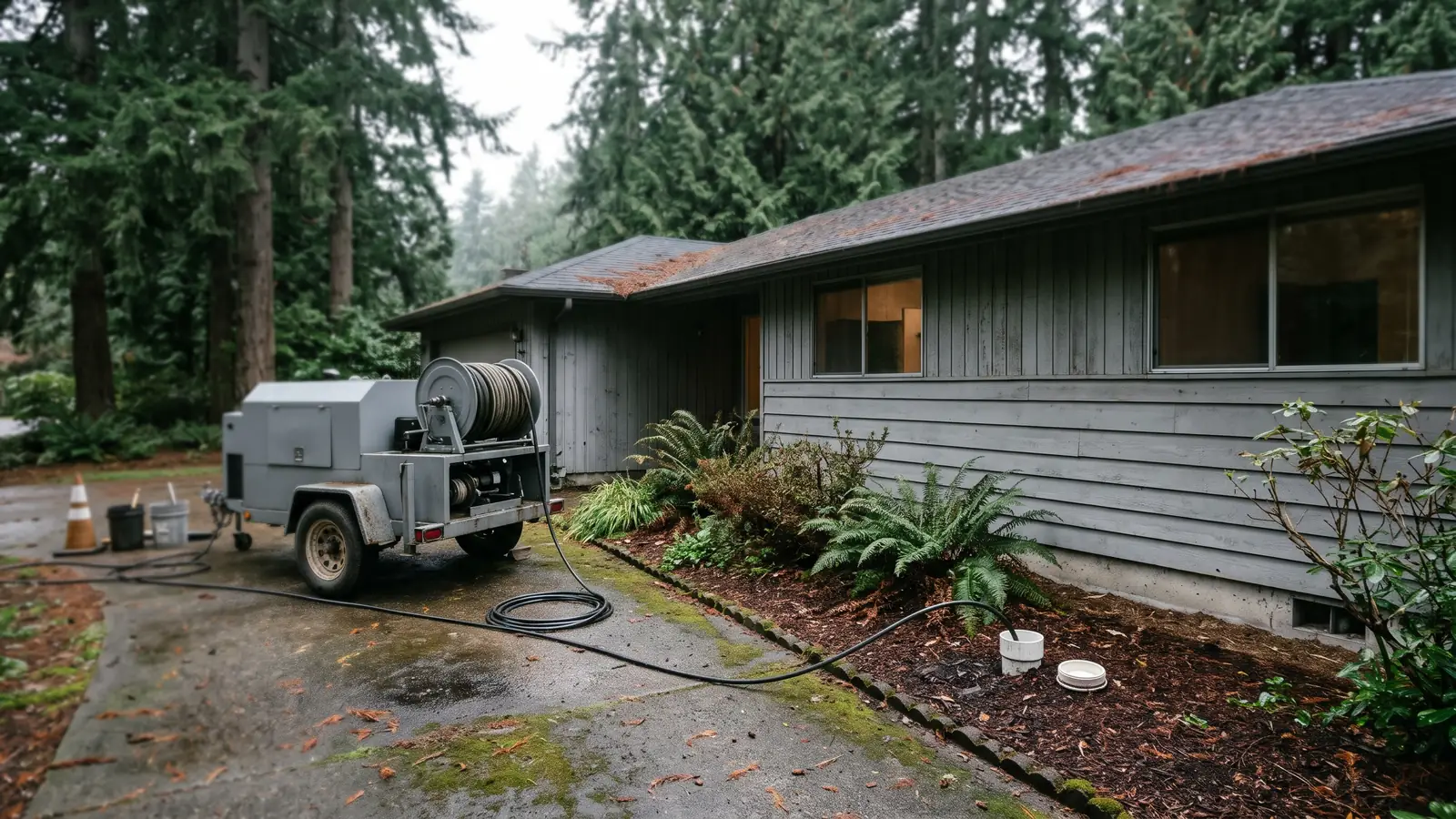
Lower-Level and Laundry Drains in Kent Homes
In a split-level or a house with a daylight basement, the floor drain, the laundry hookup and the utility sink usually sit on the lowest floor. Each one clogs in its own way.
Basement and Daylight-Basement Floor Drains
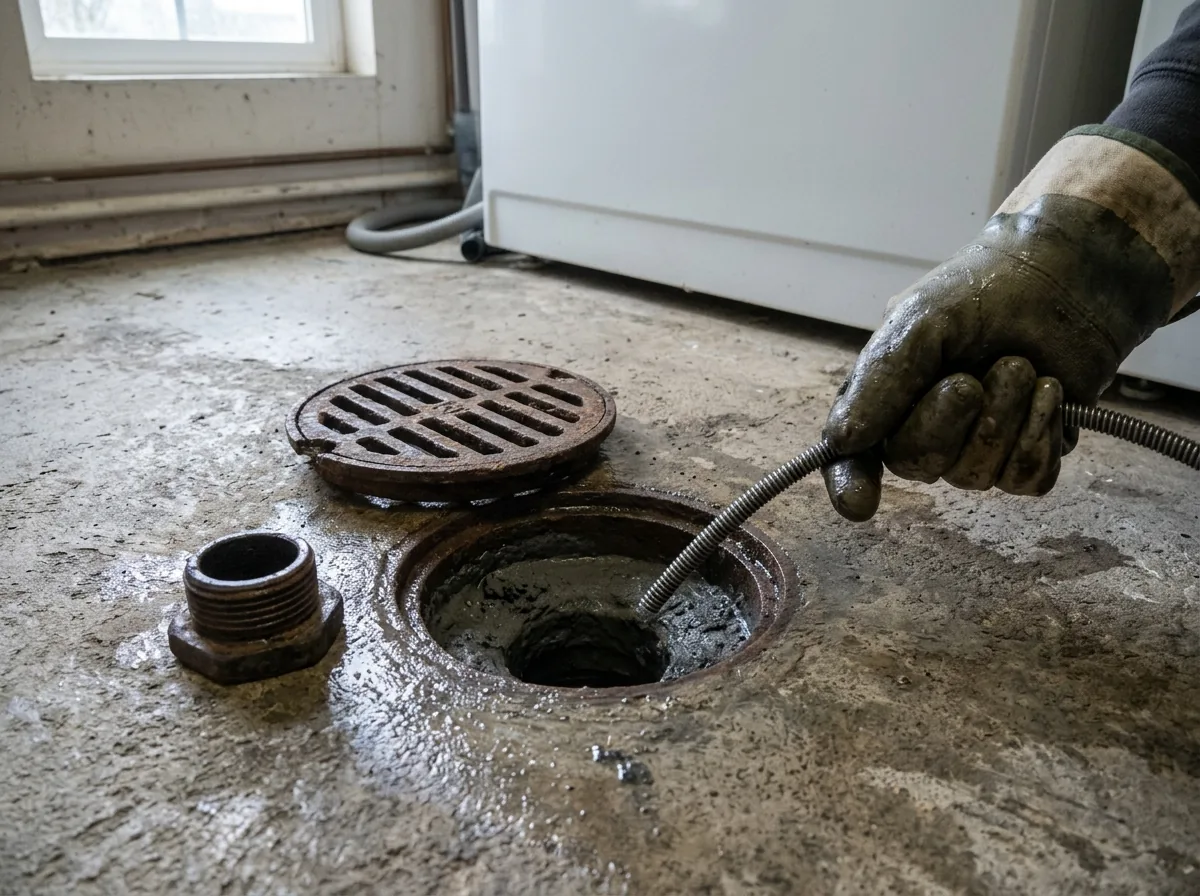
Under the grate a floor drain has a trap, and usually a cleanout plug in its side. A Minnesota home inspector, Structure Tech, explains that floor drains clog in two places: the trap itself, or the line beyond it. With the plug out, water that drains freely means the trap is the problem; water that still sits means the clog is downstream. A blocked sewer can show up here too. Sewage at a floor drain, rather than clean water, is a sewer backup call.
Garage Slab Drains
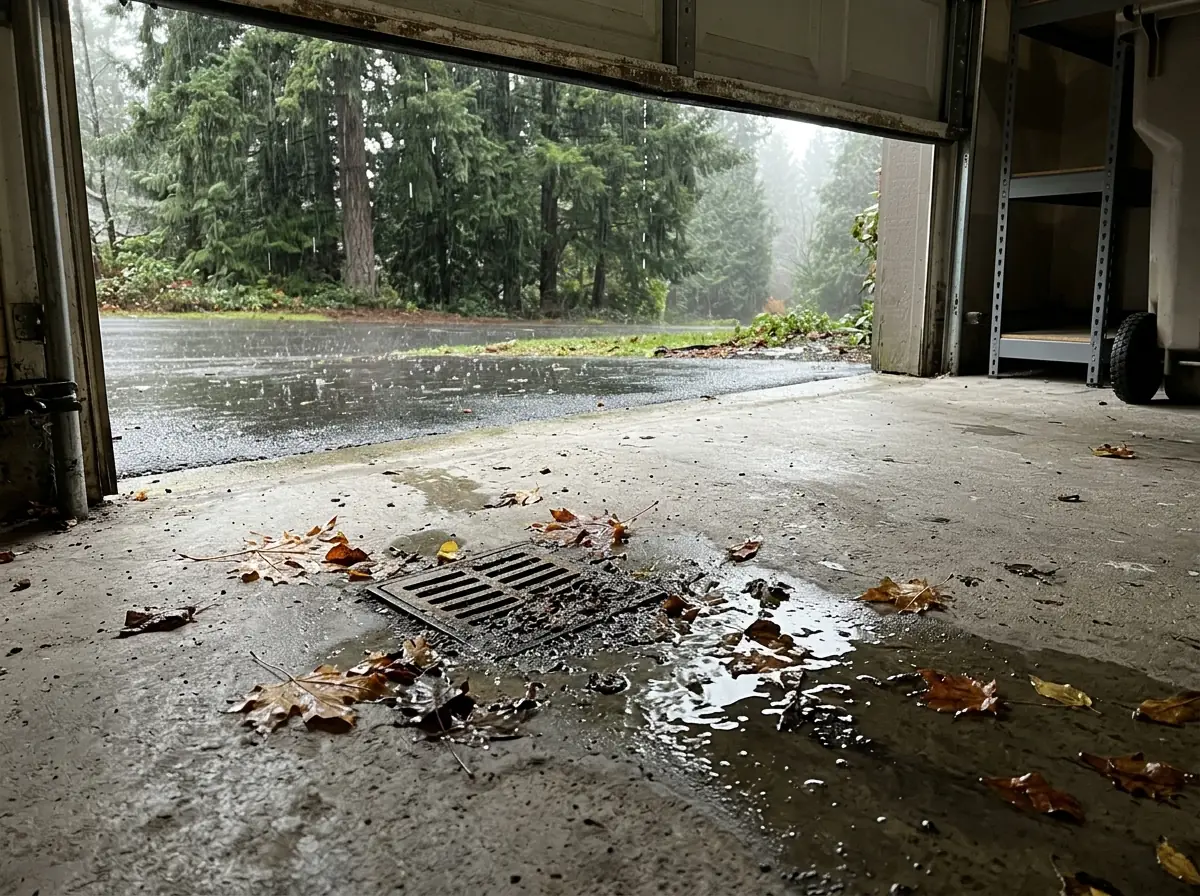
Whatever gets swept or hosed across a garage slab ends up in its drain. Before anyone clears it, find out where that pipe leads, because the rules differ. Kent bans debris, drain cleaners and other non-stormwater discharges from its storm system, as our French drain cleaning page explains.
Washing Machine Standpipe Overflows
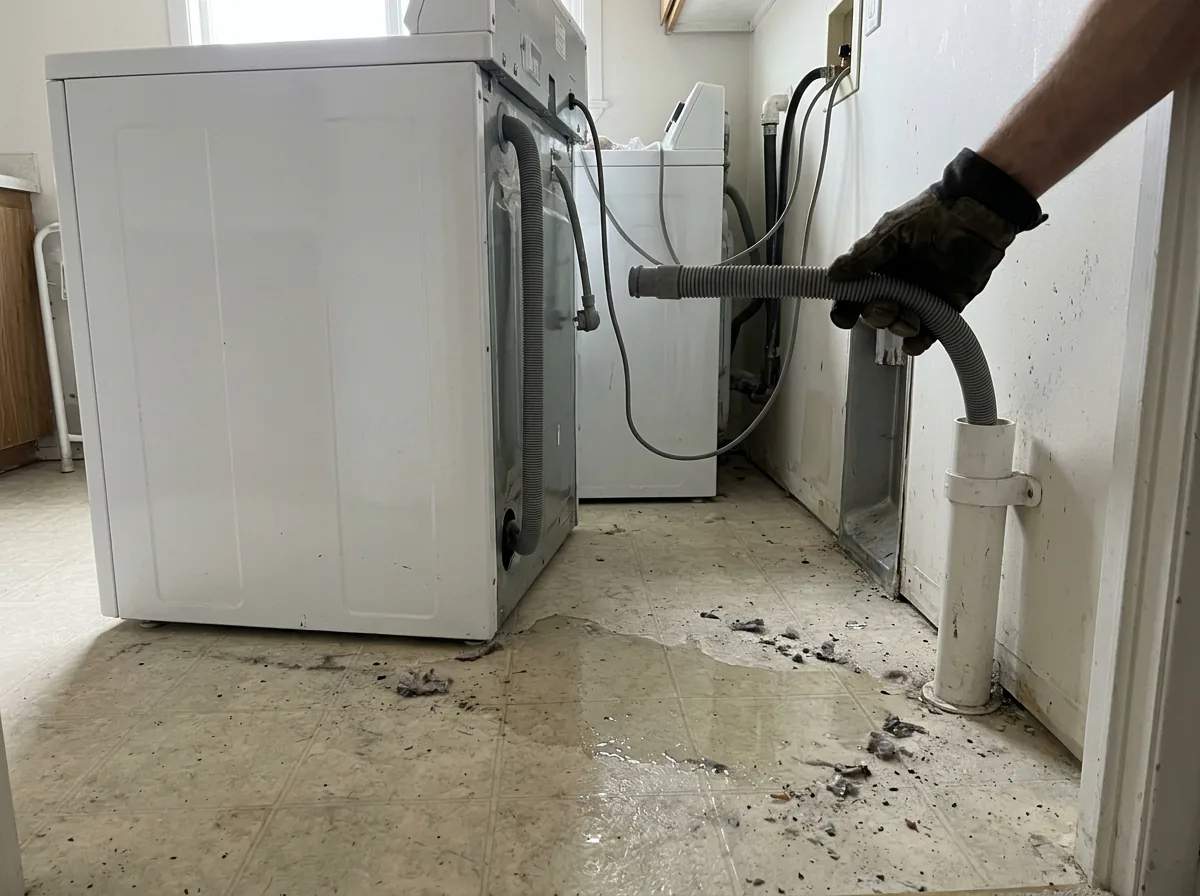
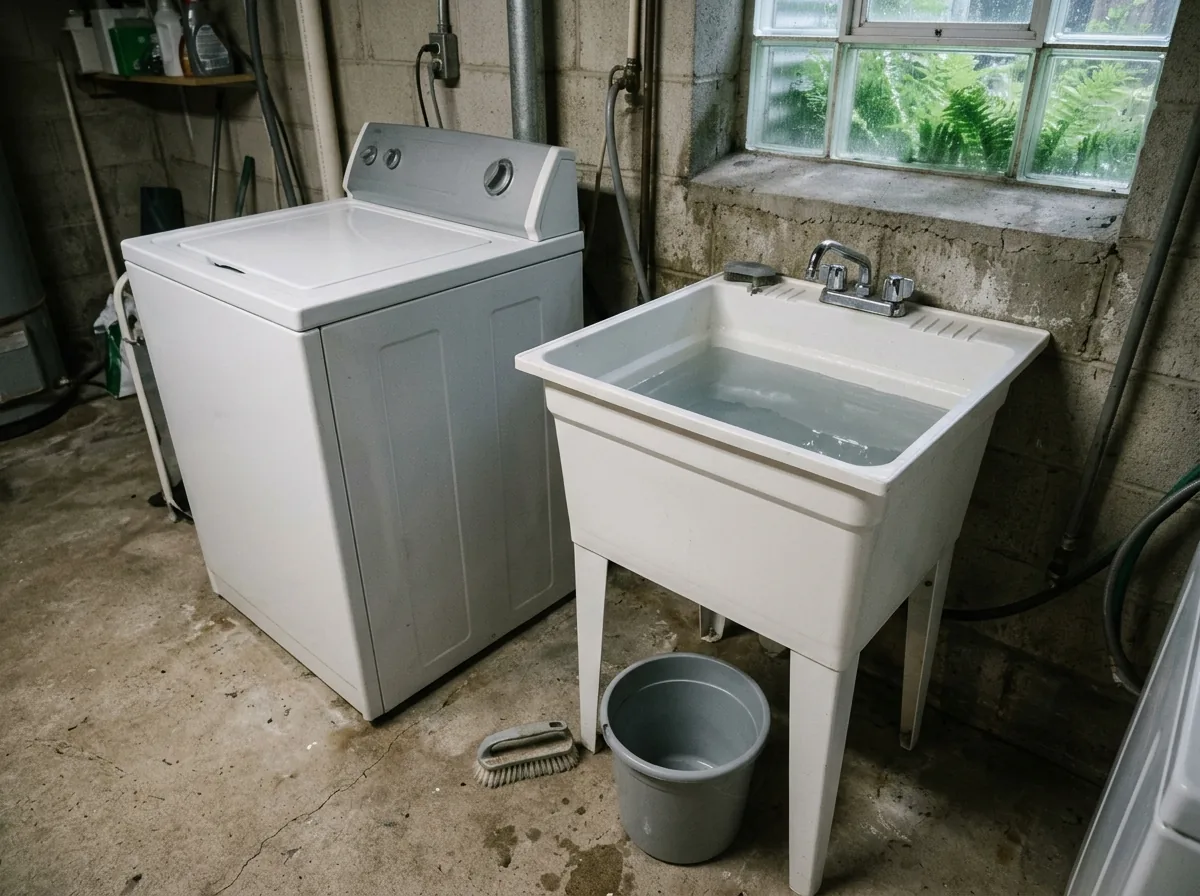
A washer empties fast into a vertical standpipe, and when the pipe below has narrowed, the water comes back over the top. HomeGuide prices clearing a laundry drain at $150 to $250, a little more than other fixtures, and pairs washing machine drains with a 50- to 75-foot cable, longer than the 25-foot cable it suggests for showers and bathroom sinks.
Utility Sinks Beside the Washer
A slow utility sink and a standpipe that overflows on the same day may share one clog, so mention both when you call. A utility sink that smells but drains fine is a different story: the South Davis Sewer District lists utility sinks among the drains whose traps dry out (more below).
Why Kent homeowners and businesses call Kent Hydro Jetting
- The request is free, and you decide whether to book
- One licensed local plumber gets your request, not a call list
- Ask for a camera look before any pressure goes in
- Ask for the price in writing before the work starts
- You pay nothing for the referral
Floor Drain Smells and Missing Plugs
A floor drain that smells like sewer gas isn't always clogged. The South Davis Sewer District explains that when a drain isn't used, the water in its trap slowly evaporates, and once the trap is dry, sewer gas comes in. Basement and garage floor drains, laundry drains and utility sinks are on its list of usual suspects. The fix is cheap:
- Run water into every floor drain at least once a month.
- For a drain that rarely gets water, the district suggests a little mineral oil on top of the refilled trap to slow evaporation.
Check that the cleanout plug is in place
Structure Tech warns that a missing plug lets sewer gas into the home and often means someone opened it to work around a clog.
If the smell comes back with the trap full and the plug in, ask for a camera look at the line.