
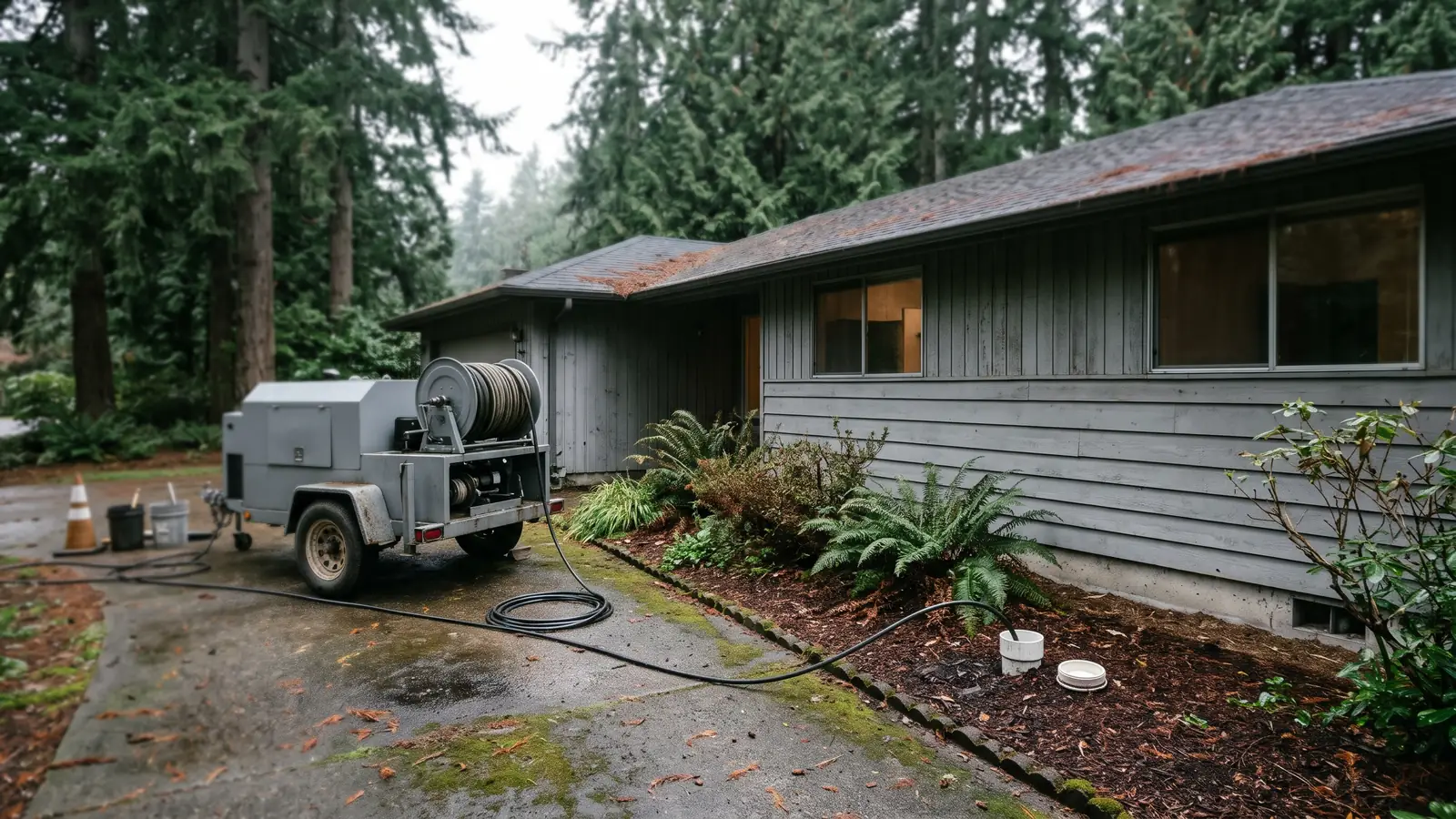
Rainwater Lines Around a Kent House
These pipes carry rain and groundwater, not sewage, and Kent's code treats them differently from the side sewer at every step.
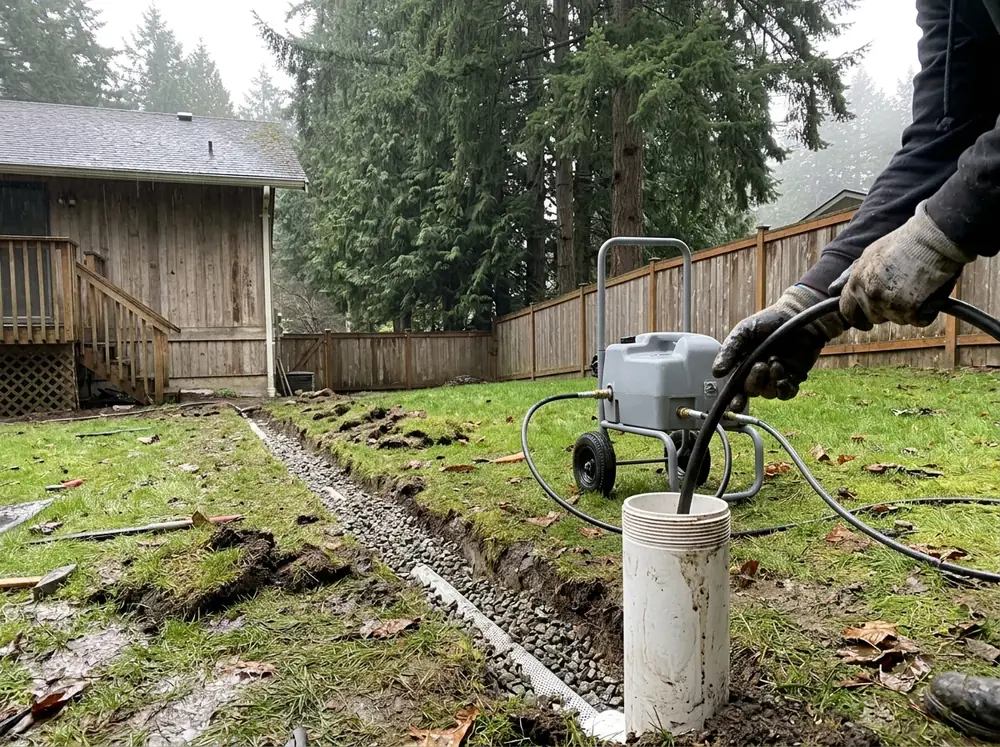
French and Curtain Drains in Yards
HomeGuide's depth guide for exterior drains:
- Shallow French drain: under 2 feet deep.
- Curtain drain: 2 feet or deeper.
Both are perforated pipe in gravel. HomeGuide lists the usual causes of a clog as poor installation, roots and debris that builds up over time, plus iron ochre in some soils, which means cleaning more often than once a year. Its described method is an electric snake to open the line, then water to flush out what's left. A trench wrapped in geotextile fabric stays clear longer than a pipe sock alone.
Footing Drains Around the Foundation
A footing drain is the deep version, laid at the foundation footings to keep groundwater off the walls. HomeGuide calls PVC the better pipe for deep footing drains because it's more durable than corrugated pipe and takes a plumber's snake without risk of damage, so ask what yours is made of before it's cleaned. Kent's code lists footing drains and foundation drains carrying clean groundwater or stormwater as allowed discharges to the storm system. If the house is on septic, King County's code also says to direct footing and roof drains away from the drain field (septic line jetting).
Underground Downspout Lines
Buried downspout lines carry roof water from the gutters to wherever the lot sends it. Kent's code makes two rules about where that can be:
- Roof drains connected to the storm system are not illicit connections.
- Roof runoff, stormwater and groundwater may not go into the sanitary sewer unless the city's public works director expressly allows it.
So if a camera run shows a downspout line tied into the house sewer, that's a code problem as well as a drainage one, and worth raising with the plumber before anyone jets it.
Where the Flushed Water Goes
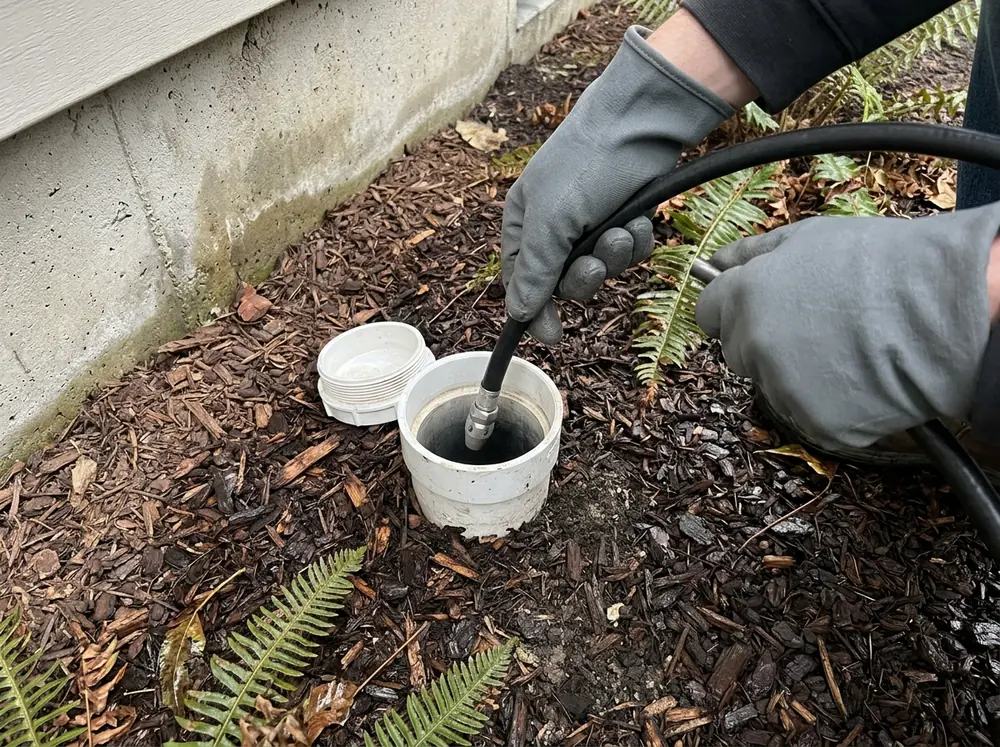
Kent bans non-stormwater discharges to its storm system. The prohibited list names debris, drain cleaners, sewage and grease, and also silt, sediment, dirt, sand and collected leaves, which is most of what comes out of a clogged yard drain. Ask how the plumber will catch what the jetter loosens: vacuumed up at the outlet or a cleanout, not washed into a street catch basin. HomeGuide lists the usual outlets for a French drain as daylight somewhere downhill, a drywell, a sump pump or a nearby storm drain. Knowing which one yours uses tells the plumber where to start.
Why Kent homeowners and businesses call Kent Hydro Jetting
- The request is free, and you decide whether to book
- One licensed local plumber gets your request, not a call list
- Ask for a camera look before any pressure goes in
- Ask for the price in writing before the work starts
- You pay nothing for the referral
French Drain Cleaning Cost and Upkeep
HomeGuide's price, yearly interval and lifespan are in the summary at the top. One more point from the same guide: sump-pump systems usually need service within 10 years.
A camera run after cleaning shows whether the pipe is sound or has sections that cleaning won't bring back. For the commercial side of rainwater (parking lot catch basins, trench drains and storm lines between basins), see catch basin and storm drain cleaning.