
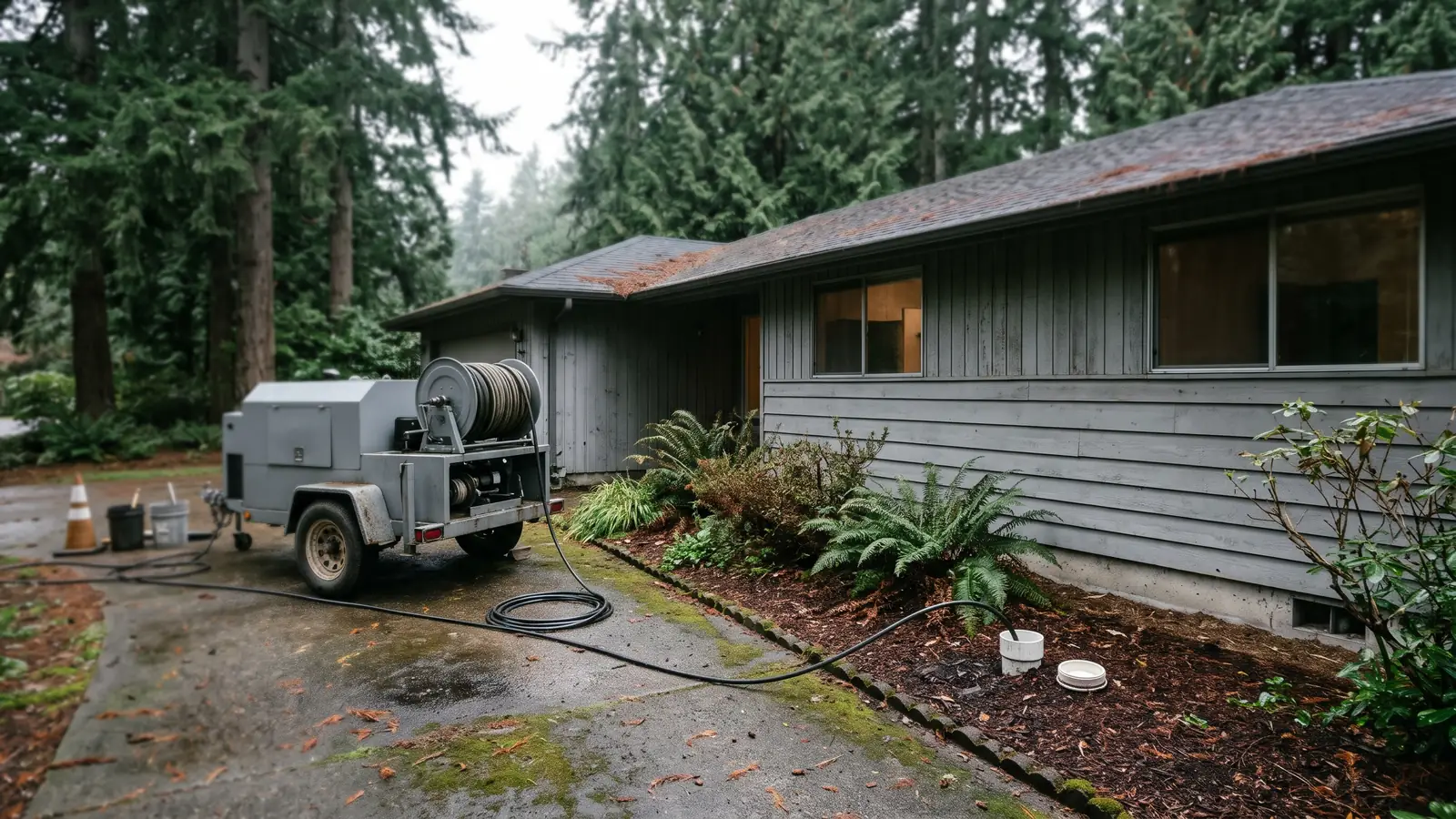
Where a Kitchen Drain Clog Usually Sits
HomeGuide lists grease, fat, soap scum and food waste from the disposal as the usual kitchen culprits. Where they collect decides how the line gets cleared.
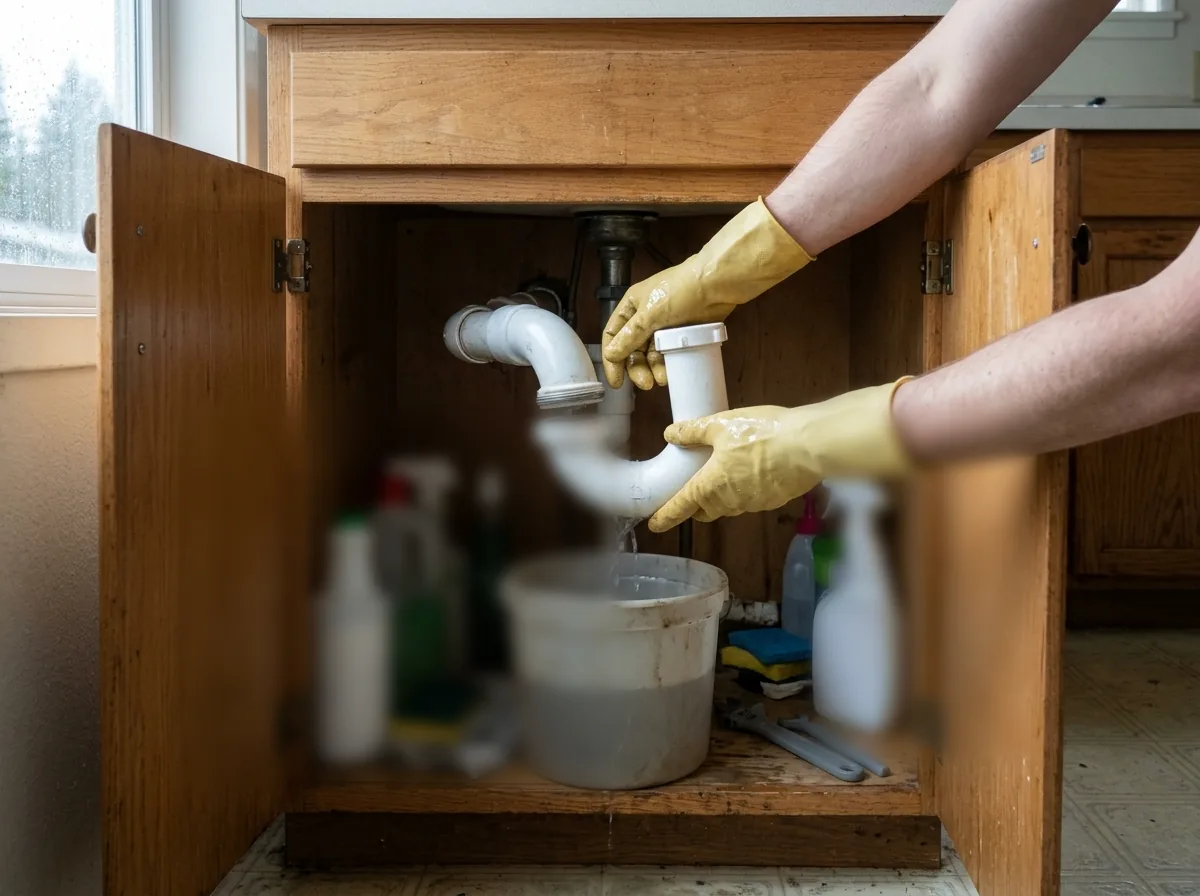
Under-Sink Trap and Horizontal Arm
The trap is the curved pipe that holds water to block sewer gas; the short arm after it runs into the wall. When a disposal is fitted, HomeGuide says the plumber first rules out the unit itself, and only then removes the trap fitting and the arm to run a snake into the pipe. A clog this close to the sink is the quick kind: HomeGuide's estimate is about five minutes of snaking.
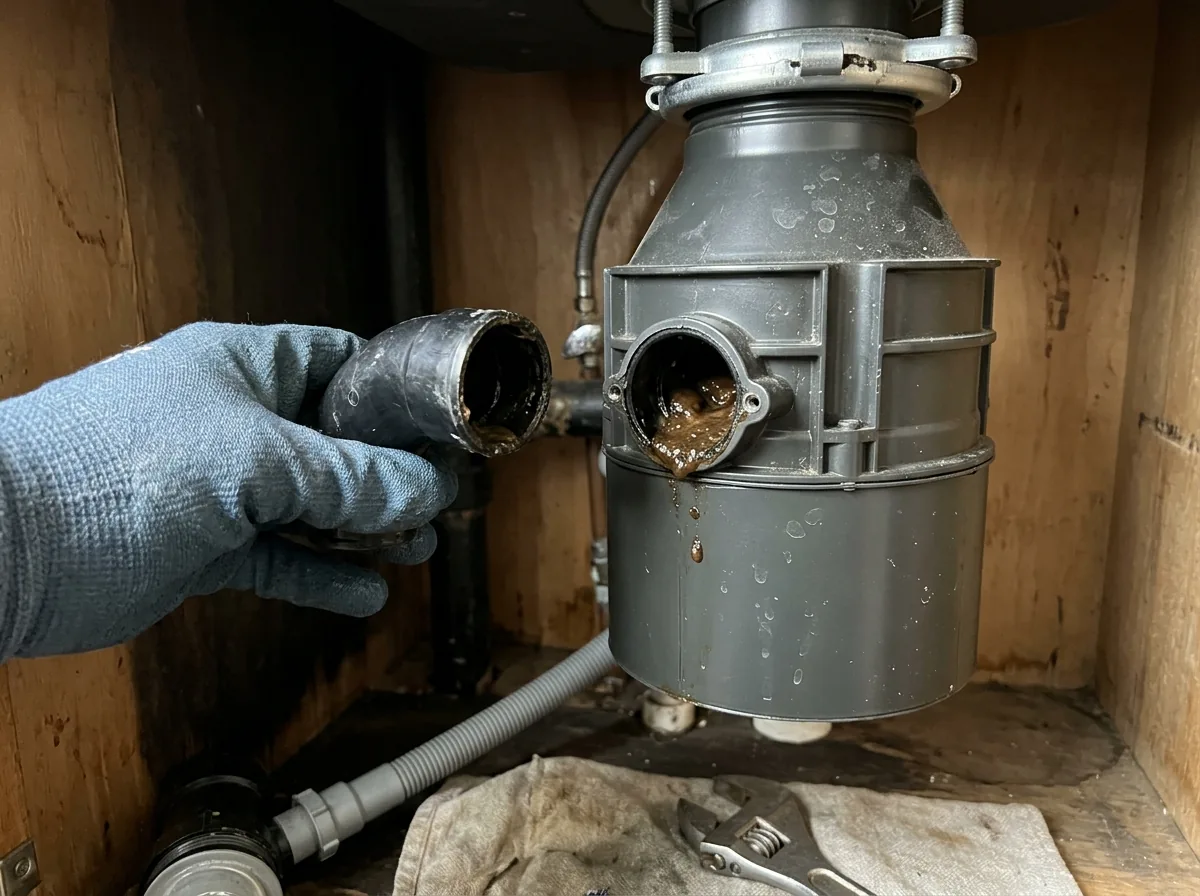
Garbage Disposal Discharge Line
A disposal chops food small, but it doesn't make grease go away. King County puts it bluntly: disposals only shred grease into smaller pieces, which still stick to the pipe downstream. If the line is clear and the unit still won't drain, the disposal is the fault, and HomeGuide prices a replacement at $200 to $550.
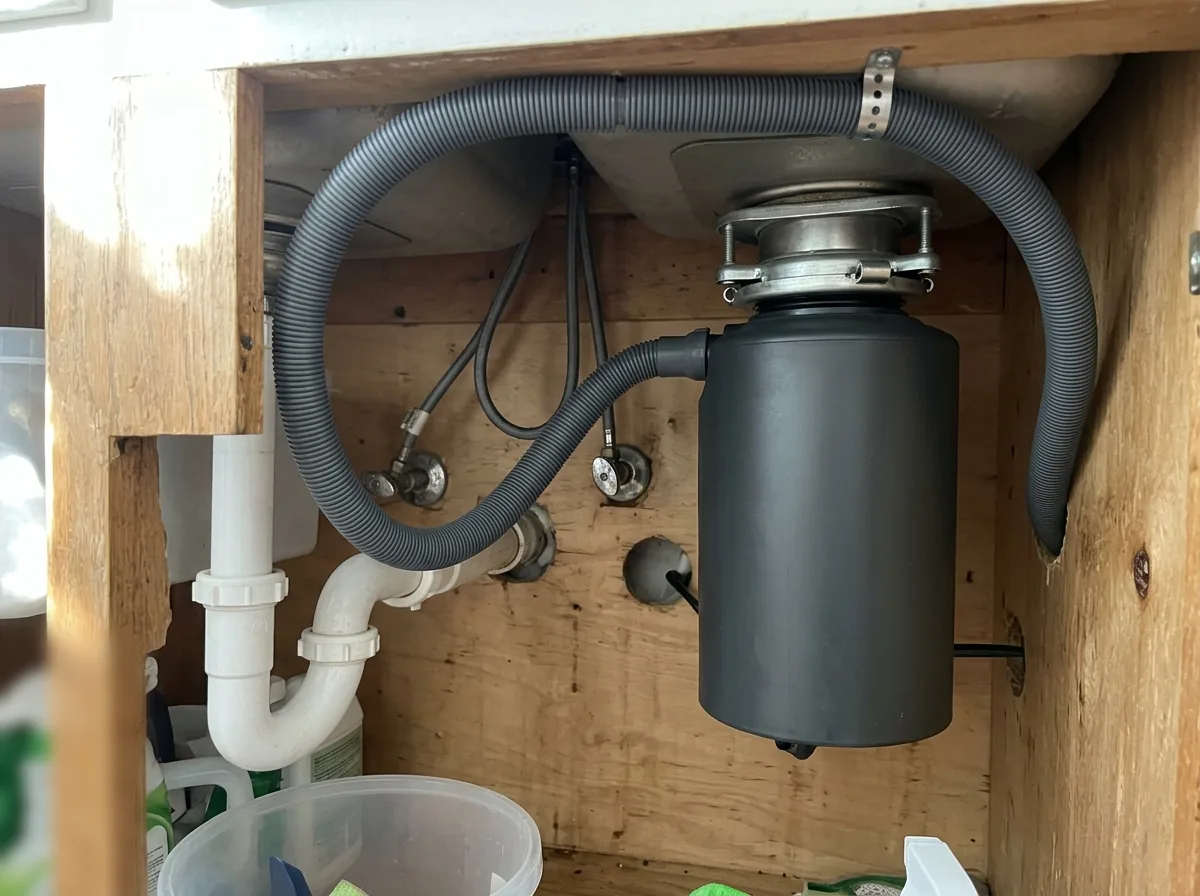
Dishwasher Hose, High Loop and Air Gap
The dishwasher's drain hose ends at the disposal or at the sink tailpiece. When the sink line clogs, Ferguson's trade guide notes, the wastewater has nowhere to go but up, and some of it can run back into the dishwasher. Two setups guard against that:
- High loop: the hose rises as high as it can under the counter and is strapped in place. If the strap fails and the hose sags, the protection is lost.
- Air gap: a small fitting mounted above the sink deck that breaks the line, so water can't siphon back.
Ferguson adds that not every local code accepts a high loop on its own. Ask the plumber to check yours while the sink is open.
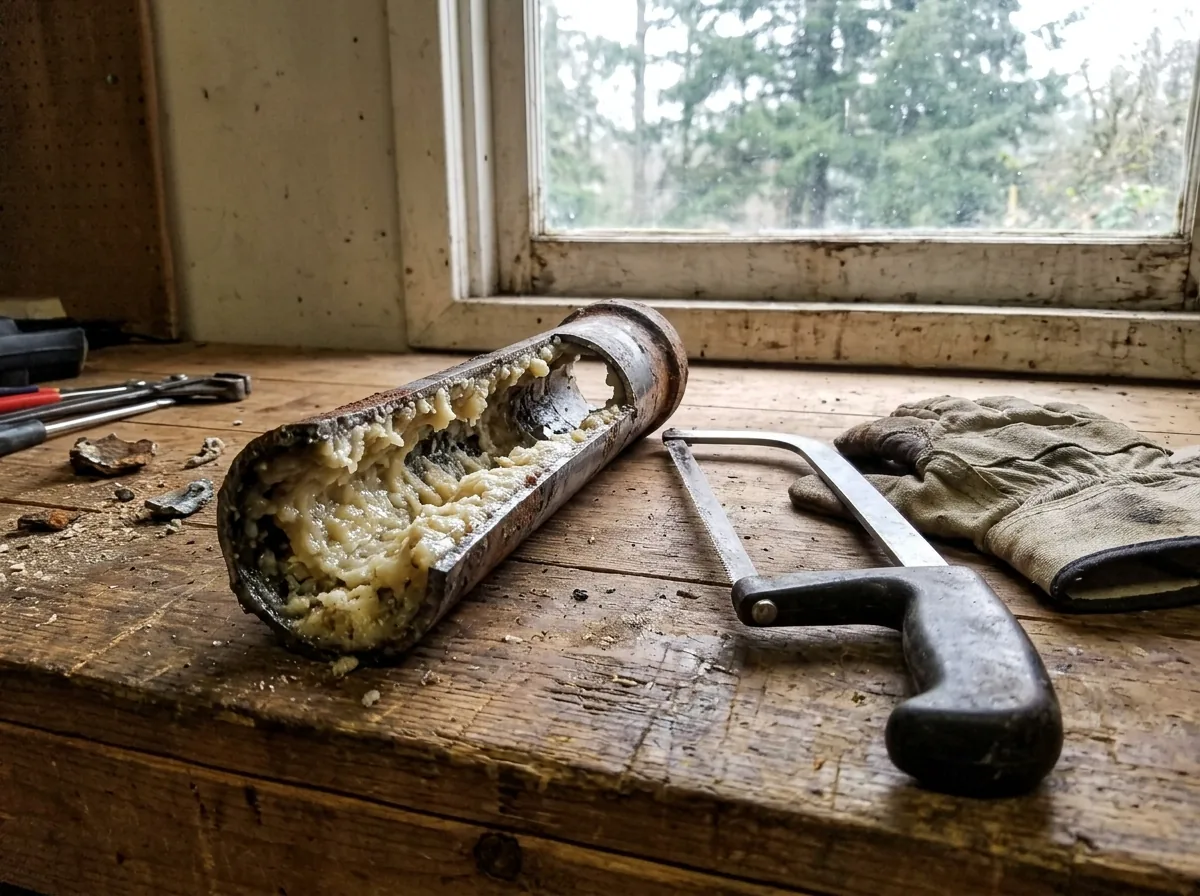
Grease Set Hard in the Line Behind the Wall
Past the wall, the kitchen branch runs to the main stack or under the floor to the side sewer. King County explains that grease sticks to the inside of the pipe and builds up until it can block the whole line. HomeGuide adds that a cable only makes a hole in a clog rather than clearing it all, so the line closes up again sooner. Kent's sewer code goes a step further: grease you can see built up inside a side sewer, enough that it's likely to block the flow, is a violation by itself. Snaking compared with jetting is laid out on our drain cleaning page, including the small jetters made for kitchen-size lines.
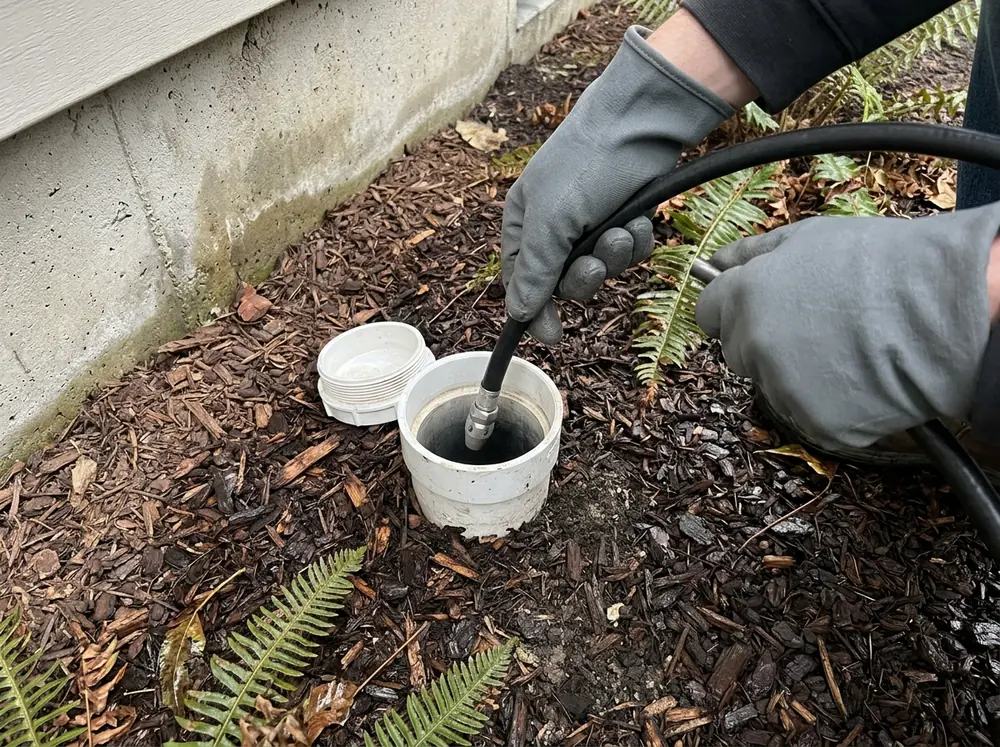
Why Kent homeowners and businesses call Kent Hydro Jetting
- The request is free, and you decide whether to book
- One licensed local plumber gets your request, not a call list
- Ask for a camera look before any pressure goes in
- Ask for the price in writing before the work starts
- You pay nothing for the referral
Keeping a Kent Kitchen Line Open After It's Cleared
King County's household advice fits in four lines:
- Scrape greasy pots, pans and bowls into the trash before washing them.
- Keep fatty food and meat scraps out of the disposal.
- Let cooking grease cool and set, then put it in the trash.
- Skip the products that promise to dissolve grease. The county warns that additives and detergents sold for that can cause trouble further down the pipe.
Restaurants and commercial kitchens fall under Kent's separate grease-device rules; see grease trap and grease line cleaning.