
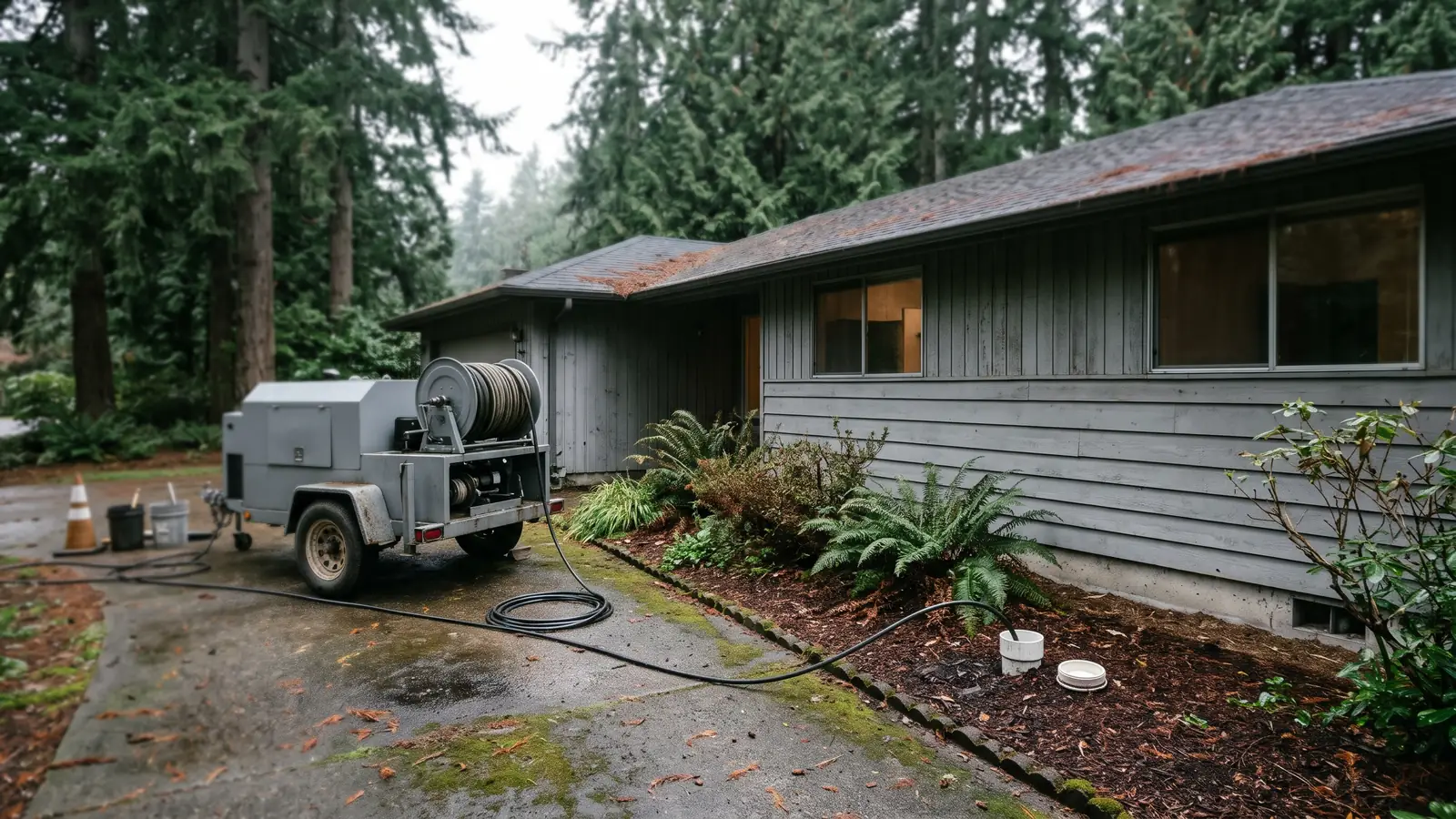
Shared Lines in Kent Apartments, Condos and Townhomes
The difference from a house is that one pipe serves many households, so the job comes with notice rules and a question of who pays.
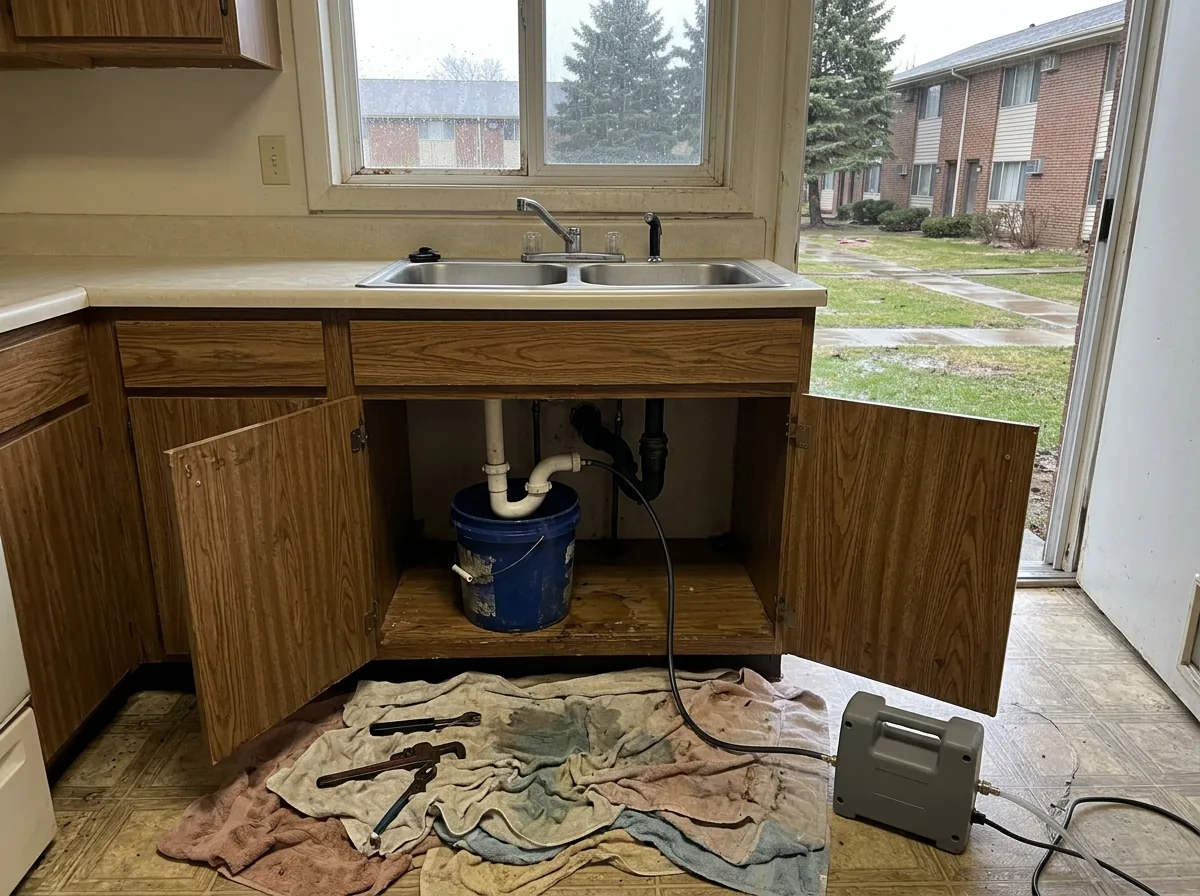
Kitchen Stacks in Multi-Story Buildings
Where kitchens sit floor over floor on a shared vertical drain, grease from every unit above ends up in the same pipe. Cleaning it usually means entry to more than one unit:
- Rentals: at least two days' written notice before entering, except in an emergency.
- Condos: owners must give the association access through their unit on prior notice, except in an emergency, for maintenance of the common elements.
How grease builds up in a sink line, and the Kent code point on it, is on kitchen drain cleaning.
Shared Building Sewers and Side Sewers
Below the stacks, one building sewer carries the whole property's waste to the side sewer and the city main. Kent puts that whole side sewer, street section included, on the property owner (side sewer ownership). For rentals, Washington's landlord-tenant act divides the duties:
- Landlord: keep the plumbing they supply in reasonably good working order.
- Tenants: use the plumbing properly.
That split is why a camera record of what caused each blockage matters. It's the evidence for whether a cleaning is routine upkeep or a tenant issue.
Townhome Rows on One Line
Townhomes or a duplex pair on one private sewer share its liability: Kent can hold any connected owner or occupant responsible for the full cost of work it orders on that pipe, after a repair notice goes unanswered. A maintenance schedule agreed in writing among the owners, or set by the HOA, keeps it from reaching that point.
Who Pays: HOA Common Elements or the Unit Owner
Washington's two condominium statutes say the same thing by default. Under RCW 64.34.328 for older condos and RCW 64.90.440 for the newer common interest act, the association maintains, repairs and replaces the common elements, including limited common elements, and each owner maintains their own unit. Where a pipe lies partly inside and partly outside a unit's boundaries, the acts sort it by what it serves:
- Serving only one unit: a limited common element allocated to that unit.
- Serving more than one unit: a common element.
Both acts let the declaration change these defaults, so your declaration has the final word. Read it before the bill is split.
Why Kent homeowners and businesses call Kent Hydro Jetting
- The request is free, and you decide whether to book
- One licensed local plumber gets your request, not a call list
- Ask for a camera look before any pressure goes in
- Ask for the price in writing before the work starts
- You pay nothing for the referral
Planning a Building-Wide Cleaning
Rental notices
set the date first, then send written notice to every rented unit on the line at least two days ahead, with the time window.Condo access
owners must let the association in through their unit on prior notice, except in an emergency.Water use
ask the units on that stack not to run dishwashers or laundry during the jetting window.Records
ask for the camera footage and a short written note per line. If the footage shows damage, the fix needs a Kent permit and belongs in the reserve budget, not the cleaning line.Interval
set the next visit from what the camera found. HomeGuide's commercial range is every 3 to 12 months.